
New Generation of World’s Rarest Duck Raises Hope for Species Recovery
News Mania Desk/ Piyal Chatterjee/ 28th August 2026

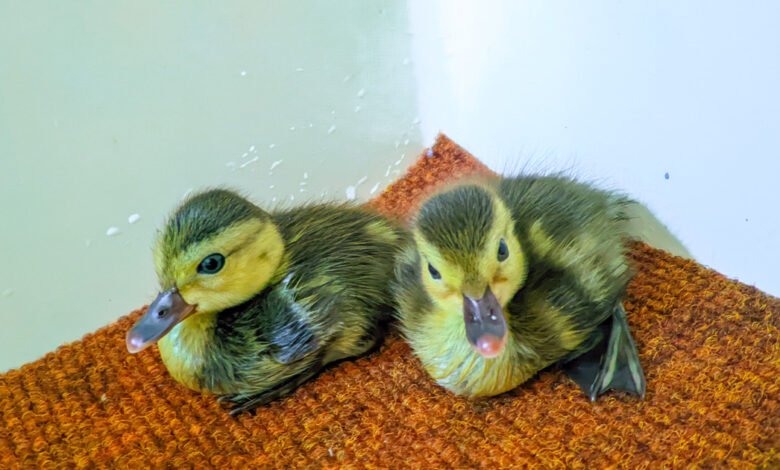
A major breakthrough in wildlife conservation has raised fresh hopes for the survival of the Madagascar pochard, regarded as the world’s rarest duck. Conservationists have successfully raised six healthy birds from eggs collected in the wild, demonstrating a new technique that could prove valuable in protecting the critically threatened species.
The six ducks were hatched from 15 fertile eggs collected from the species’ only known wild nesting location at Lake Matsaborimena in Madagascar. Teams from the Durrell Wildlife Conservation Trust and The Peregrine Fund worked together to retrieve the eggs from the remote site.
Following collection, the eggs faced an unusual journey. Durrell staff carried them approximately 44 kilometres on foot in a cooler, using a traditional Malagasy method, before they were transported to Durrell’s specialist breeding centre in Antsohihy. There, the eggs were incubated and eventually hatched. The young birds were carefully raised until they reached adulthood.
The successful outcome has shown that eggs from wild Madagascar pochards can be safely collected, transported and successfully incubated away from their natural nesting site. Conservationists say this provides an additional option when nests become vulnerable to flooding, predators or other threats.
The Madagascar pochard was once believed to be extinct before a surviving population was discovered at a single lake in north-west Madagascar. Since its rediscovery in 2006, conservation organisations have worked to rebuild its numbers through captive breeding, reintroduction programmes, habitat restoration and support for local communities.
The original captive population was established using eggs collected in 2009. Conservation efforts have since increased the overall population to around 180 birds across captive and wild populations. These include birds at Durrell’s breeding centre in Antsohihy, Bemanevika and Lake Sofia, where reintroduction efforts have helped establish another population.
Conservation biologists described the latest achievement as an important milestone because it provides another proven method for safeguarding eggs when conditions at wild nesting sites become difficult. In particular, the technique could be useful when eggs cannot be incubated at the breeding site because of flooding, predators, electricity problems, transport difficulties or other logistical challenges. The conservation programme involves several organisations and local communities. Experts say the achievement highlights the importance of long-term cooperation and persistence in preventing the extinction of highly threatened species.