NASA-IBM Lunar AI Model Uses 17 Years of Data to Map Moon’s Surface
News Mania Desk/ Piyal Chatterjee/ 6th October 2026

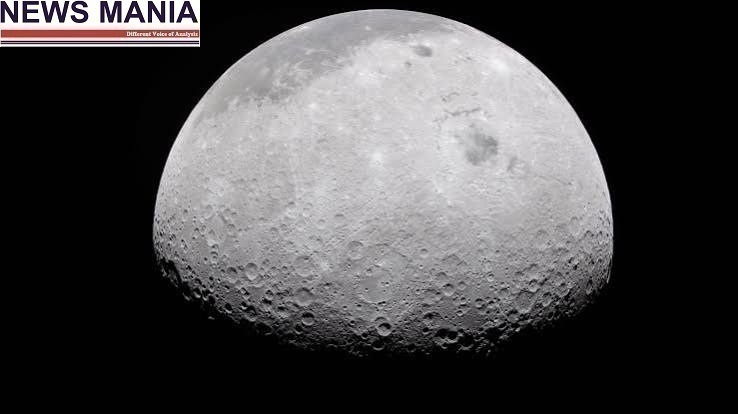
NASA and IBM have developed an open-source artificial intelligence model designed to help scientists analyse the Moon’s surface and identify geological features and potential resources. The Lunar Foundation Model has been trained using nearly 17 years of observations collected by NASA’s Lunar Reconnaissance Orbiter and other lunar missions. The model brings together almost 2 million bundles of lunar imagery and scientific data collected by different instruments. By combining these datasets, researchers aim to create a more comprehensive understanding of the lunar environment and improve the efficiency of future lunar exploration.
One of the key applications of the AI system is identifying and mapping features on the Moon’s surface. Scientists can use it to detect craters and other geological formations, while also examining regions near the lunar poles where water ice may be present. Researchers say the model has shown particular promise in predicting the possible distribution of water ice. In testing, it reportedly reduced prediction errors by as much as 22% compared with a leading baseline model.
The technology is designed to address a major challenge in analysing lunar data. Images of the Moon can look very different depending on the position of the Sun, the viewing angle and lighting conditions. The Lunar Foundation Model incorporates observations made under different conditions and at varying resolutions, allowing it to account for these differences when analysing the surface.
The developers have released the model as an open-source resource, along with associated datasets, code and benchmark collections. The move is intended to allow researchers and institutions to use the technology, test its capabilities and develop new applications.
The AI system could prove useful as countries and space agencies prepare for a new phase of lunar exploration. Detailed maps of geological formations and potential water-ice deposits could help scientists select landing sites and identify areas of interest for future missions. Water ice is particularly important for long-term lunar exploration because it could potentially provide drinking water and oxygen, while hydrogen and oxygen derived from water could also be used in producing rocket fuel.