Supreme Court Refuses Interim Plea to Suspend CEC Gyanesh Kumar, Seeks ECI Response
News Mania Desk/ Piyal Chatterjee/ 6th October 2026

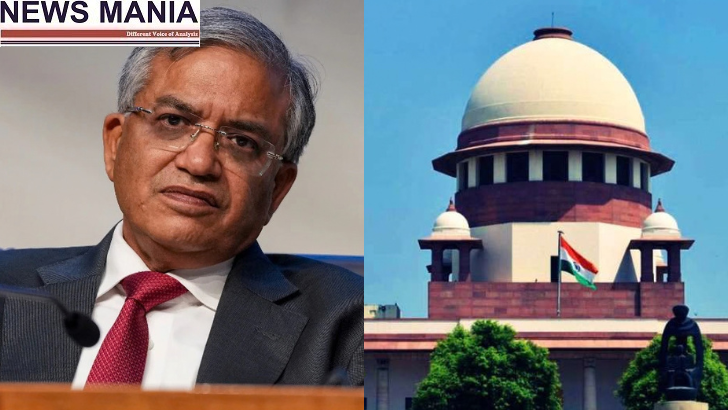
The Supreme Court on Monday declined to pass an interim order seeking the suspension of Chief Election Commissioner Gyanesh Kumar, while issuing notices to the Centre and the Election Commission of India on a petition challenging several decisions allegedly taken by the poll body.
A bench comprising Chief Justice of India Surya Kant and Justices Joymalya Bagchi and V. Mohana was hearing petitions questioning the manner in which decisions related to the Election Commission’s functioning were taken. The petitioners had sought interim relief against Kumar, alleging that important decisions were taken without following the required decision-making process within the Commission.
The plea reportedly challenges around 14 decisions connected with the Special Intensive Revision (SIR) exercise. According to the petitioners, these decisions were taken in the name of the Election Commission despite objections from the other two Election Commissioners, Sukhbir Singh Sandhu and Vivek Joshi.
The petitioners argued that the functioning of the three-member constitutional body requires decisions to be taken either unanimously or through a majority. They alleged that the Chief Election Commissioner had proceeded with several decisions despite the dissent of the other Election Commissioners.
During the hearing, the Supreme Court indicated that it would examine the official records before determining whether the challenged decisions were taken in accordance with the law. The bench was also reluctant to rely solely on newspaper reports and sought responses from the concerned authorities.
The court issued notices to the Union government, the Election Commission and Chief Election Commissioner Gyanesh Kumar, among others. The respondents will now have an opportunity to explain the circumstances in which the disputed decisions were taken and whether they complied with the statutory framework governing the poll panel.
The petitioners have also raised questions over the authority exercised by the Chief Election Commissioner in relation to the SIR process. The revision exercise has become a subject of legal and political debate, with concerns being raised over the manner in which electoral rolls are reviewed and updated.
The Supreme Court indicated that if the records ultimately establish that the decisions were taken neither unanimously nor on the basis of a valid majority, the court could consider appropriate action, including examining the validity of those decisions. For now, however, the bench has declined to suspend Kumar or grant the requested interim relief. The matter is expected to be considered further after the Centre and the Election Commission file their responses.