NASA’s Voyager Mission Transformed Space Exploration, Opening New Frontiers in Astronomy
News Mania Desk/ Piyal Chatterjee/ 17th November 2026

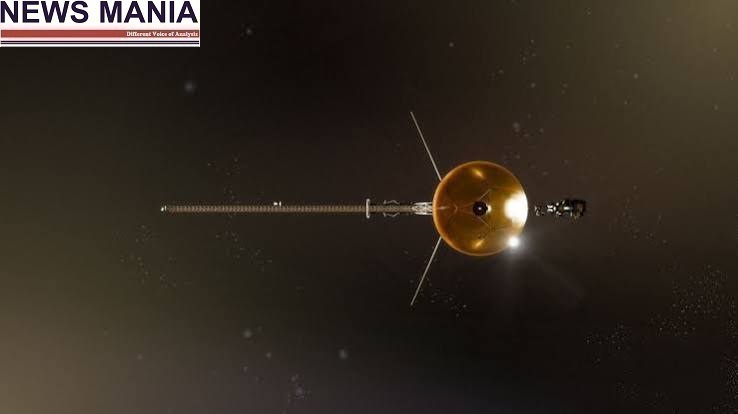
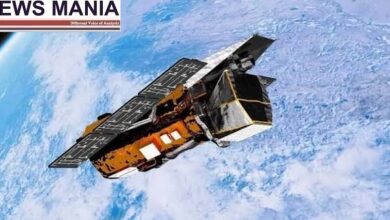
NASA’s Voyager programme has fundamentally changed humanity’s understanding of the Solar System and its surrounding environment, ushering in a new era of astronomical observations. Launched in 1977, the twin spacecraft, Voyager 1 and Voyager 2, were initially designed to explore the outer planets. However, their remarkable journeys have continued for decades, producing scientific discoveries that have reshaped our understanding of space.
Voyager 1 and Voyager 2 provided unprecedented observations of Jupiter and Saturn, revealing previously unknown details about their atmospheres, magnetic fields, moons and ring systems. One of the mission’s most significant discoveries came when Voyager 1 detected active volcanic activity on Jupiter’s moon Io, marking the first time volcanoes were observed beyond Earth.
Voyager 2 subsequently became the only spacecraft to visit Uranus and Neptune, offering scientists their first close-up observations of these distant planets. Its findings revealed complex atmospheric conditions, unusual magnetic fields and previously unknown features of their moons and planetary rings.
The mission eventually moved beyond planetary exploration. Voyager 1 entered interstellar space in 2012, followed by Voyager 2 in 2018, becoming the first two human-made spacecraft to cross the heliopause and enter the space between stars. Their instruments continue to provide valuable information about cosmic rays, magnetic fields and the interstellar environment.
Voyager 1 has also become the most distant human-made object from Earth, demonstrating the extraordinary longevity of the programme. Despite operating far beyond their original mission duration, both spacecraft have continued transmitting scientific data, although their ageing systems and limited power supplies have increasingly challenged operations.
The Voyager programme remains one of NASA’s most significant scientific achievements. Beyond its discoveries about the outer planets, the mission has expanded the boundaries of astronomical research and provided humanity with an unprecedented opportunity to study regions of space that no spacecraft had previously explored.