The Silent Tsunami: How Antimicrobial Resistance Is Redefining Global Healthcare
Binay Gupta/ 4th September 2026

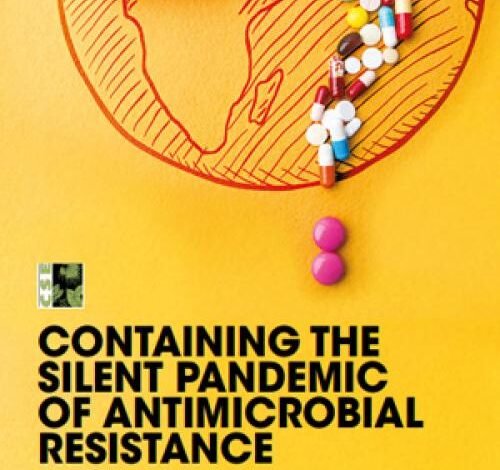
Modern medicine rests on a quiet assumption: when an infection takes hold, an effective drug exists to cure it. That foundation is crumbling. Antimicrobial Resistance (AMR)—the process by which bacteria, viruses, fungi, and parasites evolve to withstand the medications designed to kill them—is no longer a distant theoretical threat. It is a slow-moving, global crisis already quietly destabilizing modern healthcare systems.
The Scale of the Crisis
According to landmark estimates published in The Lancet, bacterial AMR was directly responsible for approximately 1.27 million global deaths in 2019 and played a role in an estimated 4.95 million deaths overall. Without decisive international interventions, projections indicate that AMR could claim up to 10 million lives annually by 2050, matching the global toll of cancer and causing an economic drain exceeding $100 trillion USD.
Unlike sudden viral outbreaks, AMR is a cumulative pandemic driven largely by the systemic overconsumption and misuse of antimicrobials across two major domains: human healthcare and industrial agriculture.
Dual Drivers: Healthcare Misuse and Agricultural Overreliance
In human healthcare, the problem stems from both clinical practices and patient behavior. Antibiotics are routinely over-prescribed for self-limiting viral infections like influenza or the common cold, where they offer zero clinical benefit. In many developing regions, critical antibiotics remain available over the counter without a prescription, accelerating inappropriate usage. Furthermore, when patients stop treatment prematurely upon feeling better, surviving bacteria gain the opportunity to mutate and develop resistance.
However, human medicine represents only part of the equation. Worldwide, a vast proportion of all medically important antibiotics are administered not to humans, but to livestock. In intensive farming, antibiotics are frequently used for:
- Growth promotion: Accelerating weight gain in healthy animals.
- Prophylaxis: Preventing disease in crowded, unsanitary industrial conditions.
This routine agricultural exposure creates ideal breeding grounds for resistant strains, such as drug-resistant Salmonella and E. coli. These superbugs travel through the food chain, agricultural runoff, and human-animal interaction, eventually entering the broader environment and human population.
Systemic Consequences for Modern Medicine
The rise of multidrug-resistant pathogens—often termed “superbugs”—endangers routine medical interventions. Procedures that rely on effective infection control could become high-risk operations:
- Elective and major surgeries: Cesarean sections, hip replacements, and cardiac bypasses become significantly more hazardous.
- Oncology: Cancer patients undergoing chemotherapy experience severe immune suppression, leaving them highly vulnerable to untreatable opportunistic infections.
- Organ transplants: Immunosuppressive therapies rely completely on targeted antibiotics to keep recipients safe.
When first-line treatments fail, clinicians must turn to second- and third-line drugs. These alternatives are often more expensive, require longer hospital stays, cause harsher side effects, and are increasingly failing as well.
The Path Forward: A “One Health” Approach
Mitigating AMR requires a coordinated “One Health” strategy that addresses human, animal, and environmental factors simultaneously:
- Stricter Stewardship: Enforcing rigid prescription controls in human healthcare and banning the non-therapeutic use of critically important antibiotics in livestock
- Diagnostic Precision: Investing in rapid diagnostic tools to ensure antibiotics are prescribed only when clinically necessary and specifically targeted.
- Incentivizing R&D: Creating new economic models to encourage pharmaceutical development. The antibiotic pipeline has stagnated because short treatment courses offer lower profit margins compared to chronic disease medications.
- Infection Prevention: Enhancing global sanitation, biosecurity on farms, and hospital hygiene to reduce initial infection rates.
Antimicrobial resistance is not a future possibility—it is an ongoing reality. Safeguarding the efficacy of these essential medicines is critical to preserving the foundations of modern healthcare.
References
Murray, C. J. L., et al. (2022). “Global burden of bacterial antimicrobial resistance in 2019: a systematic analysis.” The Lancet, 399(10325), 629–655.
O’Neill, J. (2016). Tackling Drug-Resistant Infections Globally: Final Report and Recommendations. Review on Antimicrobial Resistance.
World Health Organization (WHO). (2023). Antimicrobial Resistance Fact Sheet. WHO Press.
Van Boeckel, T. P., et al. (2015). “Global trends in antimicrobial use in food animals.” Proceedings of the National Academy of Sciences (PNAS), 112(18), 5649–5654.