Scientists Discover Elias 2-24 b, the Youngest Planet Ever Found
News Mania Desk/ Piyal Chatterjee/ 19th September 2026

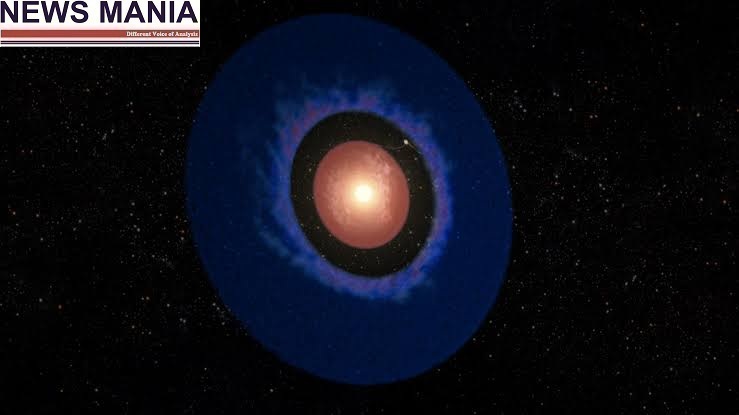
Astronomers have discovered what is being described as the youngest planet ever identified, offering scientists a rare opportunity to study a world in the earliest stages of planetary formation. Named Elias 2-24 b, the newborn planet is estimated to be less than one million years old and is located around 450 light-years from Earth.
The planet is roughly the size of Jupiter and is still embedded in the environment surrounding its young parent star. Its discovery provides scientists with an unusual glimpse into the processes that shape giant planets shortly after they emerge from their natal material.
Researchers used observations from several of the world’s leading astronomical facilities to identify and confirm the planet. These included the Atacama Large Millimeter/submillimeter Array (ALMA), the Very Large Telescope (VLT) and the W. M. Keck Observatory. Combining observations from different instruments helped astronomers distinguish the planet from the surrounding material and establish its characteristics.
Elias 2-24 b is particularly significant because giant planets such as Jupiter are generally thought to form over relatively long periods. Finding a planet at such an early stage suggests that the process of building massive worlds may occur faster than some existing models have predicted.
The planet’s location within a young planetary system also gives researchers an opportunity to examine the relationship between a developing planet and the disk of gas and dust around its host star. Such disks are the raw material from which planets, moons and other bodies eventually emerge.
Scientists say studying Elias 2-24 b could therefore provide important clues about how gas giants acquire their mass and how planetary systems evolve during their earliest stages. Observations of the system may also help researchers determine whether the planet is continuing to grow.
The discovery adds to the growing number of young exoplanets being detected around distant stars. However, Elias 2-24 b stands out because of its exceptionally young age, making it a valuable natural laboratory for understanding the birth and early evolution of giant planets.