NASA’s Perseverance Rover Sets New Record for Longest Distance Driven on Another World
News Mania Desk/ Piyal Chatterjee/ 13th October 2026

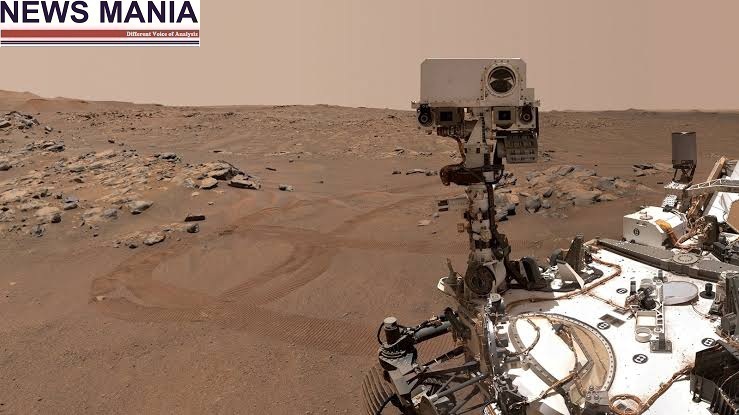
NASA’s Perseverance Mars rover has set a new record for the longest distance driven by a vehicle on another world, marking a significant milestone in planetary exploration. The rover reached approximately 45.22 kilometres (28.10 miles) on October 11, 2026, surpassing the previous record held by NASA’s Opportunity rover.
Opportunity had covered around 45.16 kilometres during its nearly 15-year mission on Mars. Perseverance, by comparison, achieved the new milestone in approximately five and a half years, demonstrating advances in autonomous navigation and robotic space exploration.
One of the key technologies supporting Perseverance’s progress is its AutoNav system. The technology enables the rover to analyse its surroundings, identify potential obstacles and select suitable routes across the Martian surface. This reduces the need for constant human intervention and allows the vehicle to cover greater distances while navigating challenging terrain.
Perseverance landed on Mars in February 2021 and has been exploring Jezero Crater, a region scientists believe once contained an ancient lake and a river delta. The area was selected because its geological features could preserve evidence of past microbial life, making it an important destination in the search for ancient life on Mars.
The rover’s mission extends beyond driving records. It studies Martian rocks, examines the planet’s geological history and collects Martian rock samples for possible return to Earth through a future mission. Scientists hope that laboratory analysis of these samples could provide more detailed information about Mars’s ancient environment and whether conditions there were once suitable for life.
Navigating Mars is particularly challenging because communication delays between Earth and the planet prevent operators from controlling every movement in real time. NASA’s Perseverance mission has been extended through approximately the end of 2028, allowing the rover to continue investigating the planet’s surface and collecting scientific data.