Goodbye Jantar Mantra:The last Courtyard of Democracy fails silent
Rajesh Kumar Singh / New Delhi/ 14th October 2026

Jantar Mantar Was Not Just a Road, It Was the Last Courtyard of Indian Democracy.The date of 11th October 2026 will be recorded in history. On the recommendation of a special committee formed by the Ministry of Home Affairs, Delhi Police Commissioner Anurag Kumar issued an order that had been feared for years,Jantar Mantar has been removed from the list of official protest sites. It has been de-notified. The government has given alternatives ,Ramlila Maidan, the vast Burari Ground and the CBD Ground in East Delhi.
On paper, it is just a change of venue, but for the democracy of this country, it is the end of an era. Here, stones do not speak, memories do.The history of Jantar Mantar begins in 1993, when the Supreme Court ruled that there would be no more protests at Boat Club near Parliament, and a corner was fixed for the voices of Delhi. Since then, this 100-meter strip became the biggest court of Hindustan.
The truth is, bricks and stones did not live here, voices did. Do you remember?
August 2011:An old man named Anna Hazare sat on a hunger strike wearing his Gandhi cap. The stage was small, but the country became very big. From here the slogan ‘Main Bhi Anna’ emerged and from here a new party was born which is in power in Delhi today.
December 2012:After the Nirbhaya case, when the whole country was angry, the candles burning at Jantar Mantar had warmed the cold winter night. Every boy and girl standing here had only one question in their eyes – is my sister safe?
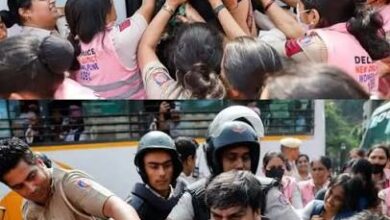
From 2016 to 2024:Here farmers from Tamil Nadu sat with their dried crops and skulls, and ex-servicemen sat on dharna for OROP. Here our wrestler daughters spent nights for justice. Unemployed youth banged empty plates and ASHA workers demanded their rights in torn sarees.
This footpath has seen Prime Ministers, and also those who sleep on footpaths. It has heard how loud democracy can be. This site was just 2 kilometers from Parliament. Its magic was this – the slogans raised from here echoed directly into the ears of power.
Now the government’s argument is that there should be no noise in Lutyens’ Delhi, protests cause traffic jams, there is a security threat. The argument may be correct. Burari Ground is very big, Ramlila Maidan is historic. But will any ground compensate for that feeling where the walls of Parliament were visible from just two kilometers away? In real terms, the real strength of Jantar Mantar was not its location, but its proximity – the courage to scream right next to the ears of power.
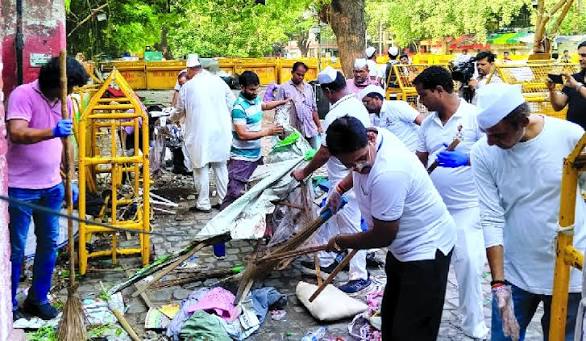
The question is, does democracy run on convenience? When you pick up someone’s voice from the busiest intersection of the city and send it to the most deserted corner of the city, you are not displacing its place, you are dispossessing it of its power. Even if thousands of people shout in Burari, their voice will remain across the Yamuna, it will not reach North Block.The strength of Jantar Mantar was not in its land, but in its symbolism. Even a single man standing there felt equal to Parliament. He felt that he too had a place in democracy.From tomorrow, barricades will be removed from there, loudspeakers will be taken down, police vans will not be there. Tourists will come and take photos of the instruments built by Maharaja Jai Singh in 1724 and leave. No one will know how many futures of this country were written on the footpath next to these instruments.
But for those who sat, wept and fought there, this road will always remain the biggest stage of the country. So it will not be easy to say goodbye to this stage. You were not just a protest site. You were the cheapest, truest and last stage for the common man of this country, where democracy could be seen even without a ticket.
(The writer is a Delhi based political journalist.)