‘A Part of India Will Always Stay in My Heart’: Departing Russian House Director Reflects on Her Five-Year Journey
Interviewed by Debasmita Moulick, senior journalist, literary scholar, and an accomplished translator/ 26th October 2026

Introduction
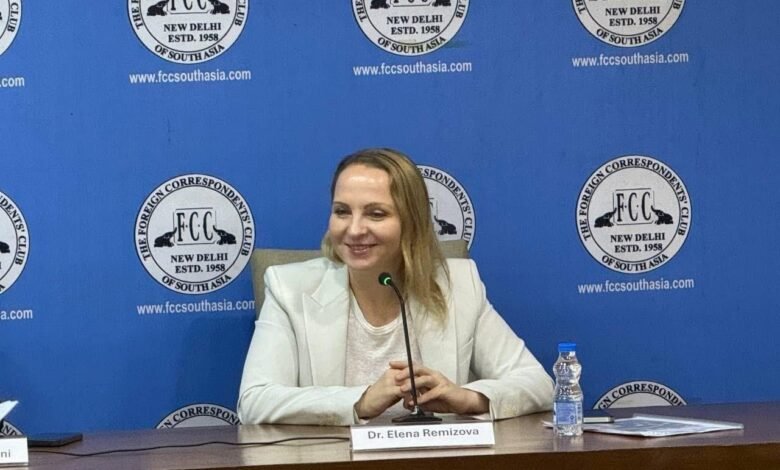
As Dr. Elena Remizova concludes a remarkable five-year tenure in India – divided equally between serving as Director of the Russian House in Mumbai and Head of Rossotrudnichestvo (Russian House) in New Delhi – she leaves behind a legacy of deepened cultural bonds and a profound personal affection for the country. This concluding conversation is a tribute to Rossotrudnichestvo’s year-long centenary celebration that kicked off in October 2025 and to Dr Remizova, who skilfully steered its mission in India throughout her leadership.
An avid admirer of Indian heritage, literature, and history, Dr Remizova sat down for a farewell interview to share her reflections on India’s youth, the dynamism of Mumbai, the diplomatic charm of Delhi, her deep emotional connection to Kolkata, and the massive untapped potential of Russia-India collaboration.
Q1: Cultural Discovery
As someone with a deep personal interest in our heritage, which specific aspects of Indian culture and history surprised or fascinated you the most?
Q2: Empowering the Future
How do you perceive the energy of India’s young generation and which dimensions of Russian life ignite their curiosity the most?
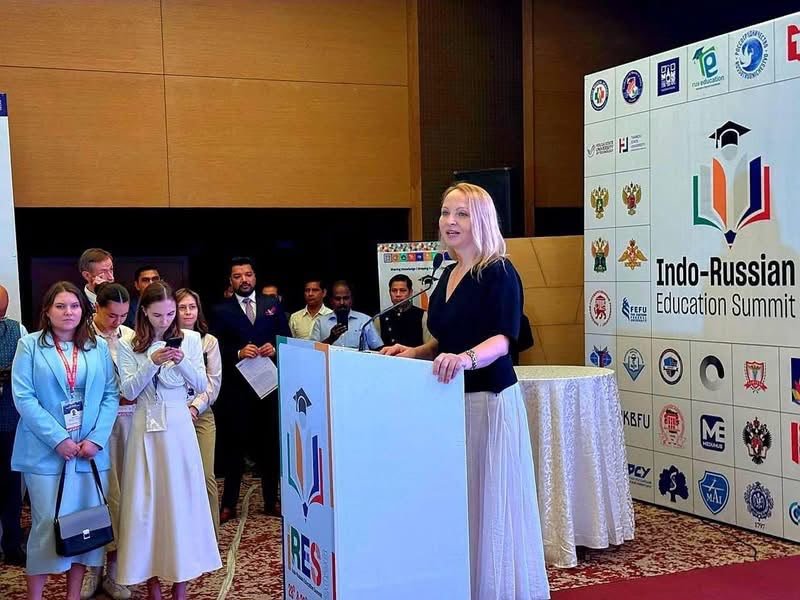
E.R.: The Indian youth have captured a truly special place in my heart. To engage them, we established the annual India-Russia Youth Forum in Delhi; applications skyrocketed from 500 last year to over 1,200 this year, proving their surging interest in Russia. While their curiosity spans many areas, education is the primary driver. Young Indians recognize Russia as a hub for academic excellence, where world-class, affordable education is accessible to all strata of society. Beyond academics, I deeply admire their open-hearted, kind, and curious nature. Because the youth in both our nations are so eager to learn about one another, I am confident our time-tested friendship is in bright hands for the future.
Q3: The ‘New Generation’ Initiative
The Novoe Pokolenie (New Generation) programme is Rossotrudnichestvo’s flagship initiative for global youth leaders. What unique opportunities does this short-term study tour offer to young Indian leaders?
E.R.: Novoe Pokolenie is an exceptional initiative that offers young Indian leaders an all-expenses-covered, two-to-three-week professional study tour in Russia. The programme provides highly customized, field-specific itineraries:
- Scientists visit cutting-edge research institutes and advanced production facilities.
- Journalists tour prominent media headquarters and collaborate with top Russian professionals.
- Medical Professionals engage in targeted hospital visits and clinical exchanges.
Rossotrudnichestvo announces the yearly themes and application tracks around March via the official social media channels and website of the Russian House in New Delhi. Every time young leaders return, I see how deeply first-hand experience shatters digital cliches. By allowing them to see the real Russia with their own eyes, this programme empowers the next generation to build lasting professional networks and personal friendships that act as a vital bridge between our nations.
Q4: Modernizing Chess for Young Minds
After reviving Mumbai’s Russian Chess Academy, you modernized clubs across all five Russian Houses in India. How do you blend the heritage of 1970s Soviet chess schools with the current rise of India’s global champions?
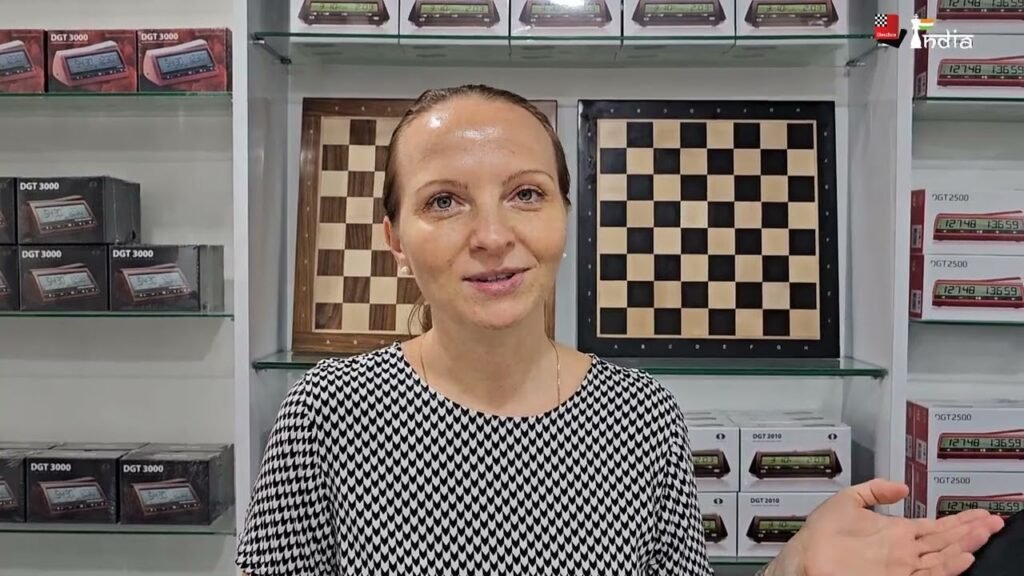
E.R.: While India is the true motherland of chess, the Soviet Union built the world’s most rigorous training ecosystem during the 20th century. When the Russian Houses were established in Delhi, Mumbai, Chennai, and Kolkata, chess clubs formed their absolute core. We are incredibly proud that many of India’s brilliant players emerged from these clubs -most famously, Grandmaster Viswanathan Anand, who honed his skills at our Chennai centre.
Today, we are keeping that legacy alive by modernizing and renovating our chess schools across India. As a key step, we recently partnered with contemporary Russian Grandmaster Sergey Karjakin, who visited Delhi to inaugurate his academy at the Russian House. By combining the rigorous foundational training of the historic Soviet school with modern technology and masterclasses, we continue to fuel the rise of India’s next generation of global chess champions.
Q5: A Tale of Two Capitals
Having led the Russian House in both Mumbai and Delhi, how do you contrast your experiences between these two major metropolises?
E.R.: Mumbai was my first home in India, so I must confess I hold a slightly special affection for it. But both cities are magnificent metropolises rapidly evolving through massive infrastructure projects. To me, the relationship between Delhi and Mumbai feels exactly like the friendly rivalry we have in Russia between Moscow and St. Petersburg – a classic tale of two great cities. This natural competition is wonderful because it acts as a powerful catalyst, giving both sides a constant impulse for further development and innovation. Ultimately, Delhi and Mumbai complement each other perfectly to tell the larger story of a rising India. Both are incredibly beautiful cities, but what truly makes them beautiful is the spirit, warmth, and energy of the people who live in them.
Q6: The Kolkata Connection
Kolkata holds a very special place in your heart. What is it about the city’s unique charm, intellect, and spirit that captivated you so deeply?
E.R.: Kolkata has truly stolen a part of my heart; it is an absolutely amazing city and the undisputed intellectual capital of India. The people are exceptionally fascinating, and I believe their deep understanding of Russian literature stems from a natural affinity between the Russian and Bengali souls. This vibrancy comes alive in the local tradition of adda – where writers, academics, and students gather to debate books and global events.
There is also a wonderful historical tie through tea, a core symbol of our friendship. Every Russian instantly recognizes the iconic “Three Elephants” tea, which was an Indian blend traded specifically for the Soviet market.
Looking forward, we must build on these strong foundations between Russia and Bengal through robust cultural and university exchanges. We recently supported a spectacular exhibition of Rabindranath Tagore’s paintings in Moscow – a master whose name is universally revered in Russia. Similarly, as we celebrate Dostoevsky’s jubilee milestone this year, our literary bond feels more relevant than ever. By bringing more Russian publishers and contemporary writers to Kolkata’s world-famous International Book Fair next year, this historic human friendship will continue to flourish.
Q7: Unlocking New Synergies
Beyond traditional sectors like defence and energy, where do you see the highest untapped potential for Russia-India collaboration?
E.R.: While defence and energy remain our historical bedrock, our future lies in expanding into four key dynamic sectors:
- Healthcare and Pharmaceuticals: Combining Russia’s medical ecosystem with India’s world-class pharmaceutical industry for joint medical research and manufacturing.
- Tourism and Cultural Travel: Easing travel and creating targeted tourism corridors to convert our mutual cultural fascination into a booming economic driver.
- Creative Industries (Cinema and Design): Welcoming Indian filmmakers to Russia. Major regions like Moscow, St. Petersburg, and breathtaking natural hubs like Lake Baikal are actively offering specialized financial incentives, rebates, and production support for Indian crews.
- Higher Education and Academic Research: Building direct university partnerships through double-degree programmes, joint research labs, and faculty exchanges.
Diversifying into these human-centric, high-revenue fields will build an even more resilient and multifaceted global partnership.
Q8: Digitalizing Cultural Diplomacy
In a rapidly digitalizing world, how can institutional bodies like the Russian House keep this bilateral cross-cultural dialogue vibrant and engaging for the youth?
E.R.: Digitalization is the very core of how today’s youth interact with the world. To connect with them effectively, we must stay ahead of the digital agenda and meet them where they are. At the Russian House, we actively leverage multiple social media platforms to broadcast event announcements, cultural highlights, and practical resources that young Indians find valuable. However, the real challenge moving forward is to invent entirely new digital tools designed specifically for cultural diplomacy – such as interactive virtual platforms, immersive digital art exchanges, and online collaborative forums. Staying digitally relevant is the only way to ensure our cross-cultural dialogue remains vibrant and impactful for the next generation.
Q9: Indian Hospitality
Looking back, are there any particular personal interactions that capture the legendary warmth and hospitality of this country?
E.R.: Indian hospitality is extraordinary because it comes straight from the heart. It reflects the kind, open nature of the Indian people, a quality very similar to the Russian soul. Everywhere I travelled, I was met with genuine warmth, but what touched me most deeply were the personal invitations into Indian homes. Sharing meals with families gave me an authentic glimpse into the true fabric of life here. Through these interactions, I realized how central the family structure is to Indian culture. Whether dealing with high-ranking officials or entrepreneurs, family always comes first, and professional matters only follow once that deep, human connection is established.
Q10: The Spirit of Maa Durga
India has just wrapped up celebrating Durga Puja. Given your deep bond with Indian culture, what is it about the spirit of Maa Durga that personally captures your heart?
E.R.: Durga Puja is a magnificent celebration whose heart beats most vibrantly in West Bengal and Kolkata. What personally captivates me most is the powerful figure of Maa Durga herself. Manifested to destroy the demon, she represents a fiercely independent feminine archetype – a warrior who is never defined merely as a passive spouse of a deity or a simple incarnation, but as a supremely autonomous protector fully prepared to fight for her children.
Her image transitions beautifully from fierce protection to nurturing care and boundless love. Every mother understands this inherent duality: the balance between being a strict protector and offering soft comfort. Her resilient spirit perfectly mirrors my own view of the ideal role of women in society. I hold a deep personal reverence for Her, and as the festival concludes, I extend my warmest congratulations to the people of Kolkata, Bengal, and all of India. May Maa Durga bless everyone in this new cycle with excellent health, happiness, family well-being, and peace.
Q11: Final Parting Thoughts
E.R.: As you leave Indian shores, what are the ultimate parting wishes or messages you carry in your heart for the people of India? What does it mean to you to take a part of India with you?
When you speak of me leaving Indian shores, it brings to mind the legacy of Afanasy Nikitin.(Smiles) He was the very first Russian merchant and traveller to visit India, arriving more than 550 years ago – even before the Portuguese. Nikitin left behind profound diaries detailing the traditions, food, and daily life he absorbed here, which remain a priceless historical source. While I may not be a historic explorer like him, I feel a similar deep transformation. I carry India truly in my heart, and I now consider it my second home.
A five-year tenure is simply not enough to fully know such a monumental country. I deeply dream of returning one day, even if just as a tourist, because there are still so many incredible places left for me to explore. No matter where my path leads, I will remain forever connected to India and to the wonderful friends I have made here. I will be absolutely delighted to meet them again anytime – whether in India, in Russia, or anywhere else in the world.
I am profoundly grateful to India. I am leaving not just with beautiful memories and lifelong friendships, but with a deeper understanding of life itself. Over these five years, I feel I have grown wiser (laughs), and all the credit for that personal growth goes entirely to India and its people.
Therefore, I am not saying a final goodbye. In Russian, we say “Do svidaniya” (until we meet again) because “Proshchay” (farewell) is not for us. Instead, I choose to say in Hindi: Phir milenge. I have enjoyed reviving beautiful memories through this interview. India will stay with me for the rest of my life.
Concluding Observation
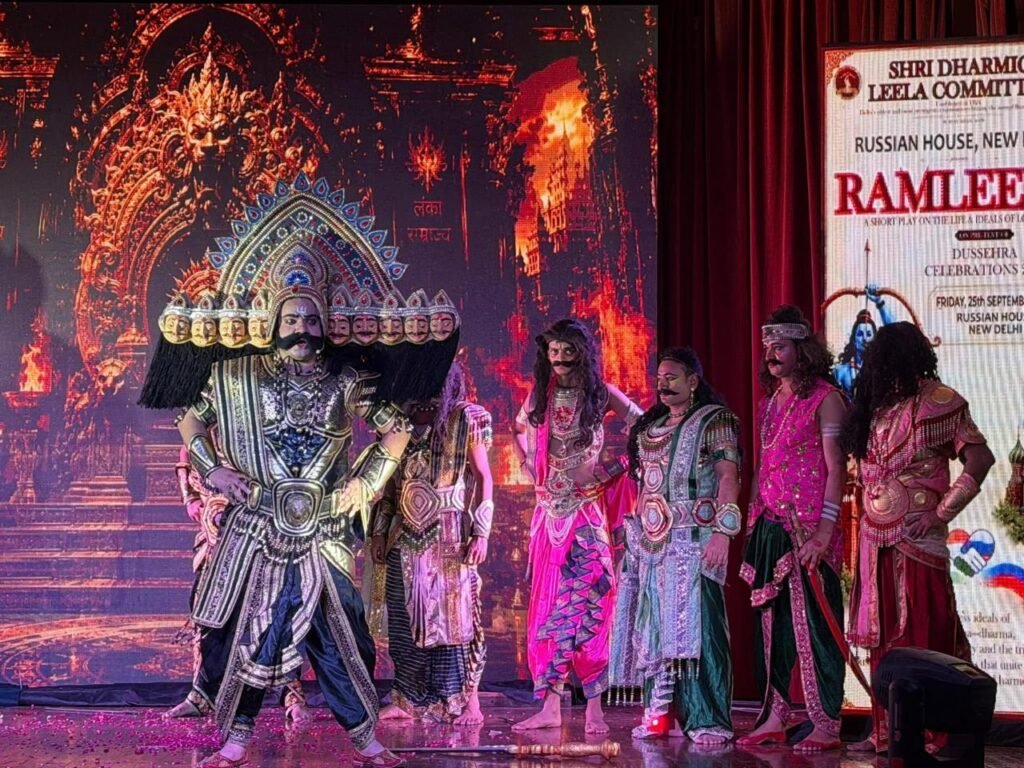
It is highly apropos that on the very eve of Dr. Remizova’s departure, the Russian House in New Delhi hosted a spectacular staging of the revered Ramleela. This timeless classic – fundamentally a story of homecoming – took centre stage as she prepared for her own journey home, serving as a beautiful poetic farewell, perfectly coinciding with the annual onset of India’s festive season.
Her departure marks a seamless transition rather than an end. Through her deep appreciation for India’s historical roots and its youth, she has built a lasting cultural bridge. The warmth of her interactions ensures her presence will be felt long after she leaves. We wish her the very best in her future endeavours. Dhanyavad and Do svidaniya!