Trump’s Plans for the Hemisphere Face Setback as Lula Defeats Flavio Bolsonaro in Brazil Presidential Race
News Mania Desk/ Piyal Chatterjee/ 26th October 2026

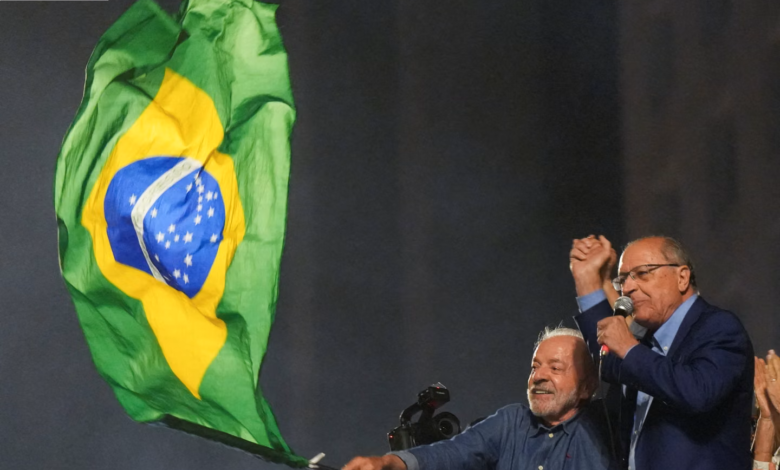
Brazilian voters ended a run of seven consecutive conservative presidential election victories across Latin America in eighteen months, denying the region’s rising right-wing movement one of its most significant prizes.
The victory of leftist incumbent President Luiz Inacio Lula da Silva over Flavio Bolsonaro on October 25, with 51.8% of the vote against 48.2%, limits US President Donald Trump’s efforts to strengthen American influence across the Western Hemisphere. It also reinforces Brazil, Latin America’s largest economy and most populous country, as a potential counterweight to Washington.
Lula’s victory could make it harder for the Trump administration to bring Brazil into its proposed military coalition against drug cartels and secure preferential access to the country’s valuable mineral resources. Washington has increasingly relied on tariffs, sanctions and military pressure to reinforce its regional influence.
However, both countries have reasons to cooperate. The United States wants access to Brazil’s substantial rare earth reserves to reduce its defence industry’s dependence on China. Lula, meanwhile, is seeking tariff relief for Brazilian exporters and greater international investment.
Flavio Bolsonaro, the son of imprisoned former president Jair Bolsonaro, questioned the election result and threatened to seek its annulment. He challenged a late Sunday ruling by a Supreme Court justice that extended voting by two hours because of alleged irregularities affecting voters’ access to polling stations.
Analysts said his challenge was unlikely to succeed, given Lula’s margin of more than four million votes. Bolsonaro’s position could also be weakened by his camp’s earlier request to delay voting because of heavy rain in Brazil’s conservative-leaning southern region.
His refusal to accept defeat has raised concerns about possible protests and renewed political instability. After the 2022 election, Jair Bolsonaro’s supporters stormed government buildings, triggering a major crisis. He was subsequently sentenced to 27 years in prison for organising a coup.
Across Latin America, frustration over organised crime and economic instability has boosted conservative candidates promising tougher security policies. While Bolsonaro sought closer alignment with Trump’s regional strategy, Lula favoured nonalignment and stronger ties with China and the BRICS bloc.
India’s Prime Minister Narendra Modi, whose country currently chairs BRICS, congratulated Lula and expressed his desire to deepen the India-Brazil strategic partnership.