NASA’s Swift Telescope Ends Science Operations, Faces Imminent Return to Earth
News Mania Desk/ Piyal Chatterjee/ 26th October 2026

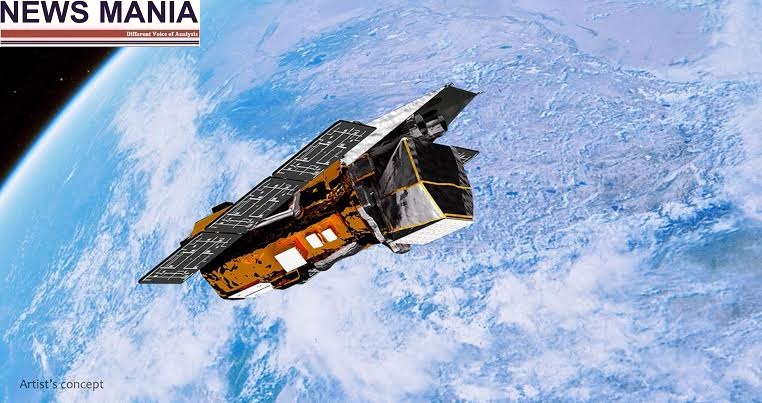
NASA’s Neil Gehrels Swift Observatory has ended its scientific operations after nearly 22 years in space and is now preparing for an eventual return to Earth’s atmosphere. The spacecraft, which transformed the study of gamma-ray bursts and other energetic cosmic events, entered safe mode on October 20, 2026, marking the end of its operational mission.
The telescope’s declining orbit has made its continued operation increasingly difficult. Swift was orbiting Earth at an altitude of approximately 275 kilometres when it entered safe mode. Increased atmospheric drag, intensified by heightened solar activity, has accelerated the spacecraft’s descent, bringing its eventual atmospheric re-entry closer.
Launched in November 2004, Swift was designed to detect gamma-ray bursts, some of the most powerful explosions in the universe. These brief but intense flashes of high-energy radiation can provide important insights into the deaths of massive stars, the formation of black holes and the evolution of the early universe.
The observatory used three complementary instruments to detect gamma-ray bursts and study their afterglows across X-ray, ultraviolet, optical and gamma-ray wavelengths. Its ability to rapidly identify cosmic explosions and direct its instruments towards them made it a valuable resource for astronomers worldwide.
Over the course of its mission, Swift also contributed to research involving supernovae, black holes, neutron stars and other extreme astronomical objects. Its observations helped scientists investigate how these phenomena evolve and how energetic events unfold across the universe. Efforts to extend the spacecraft’s operational life included plans for a mission to raise its orbit and prevent an early atmospheric re-entry. However, the proposed rescue mission was abandoned in August 2026. Swift subsequently resumed observations for a limited period before entering safe mode in October.
Although the spacecraft’s scientific operations have ended, its contribution to astronomy is expected to continue through the extensive scientific data archive collected over nearly two decades. Researchers will be able to analyse these data to investigate cosmic explosions and other high-energy events long after the observatory ceases functioning.