PhD holders, bankers, and cardiologists: How Serbia’s New Parliament Will Differ
News Mania Desk/ Piyal Chatterjee/ 27th October 2026

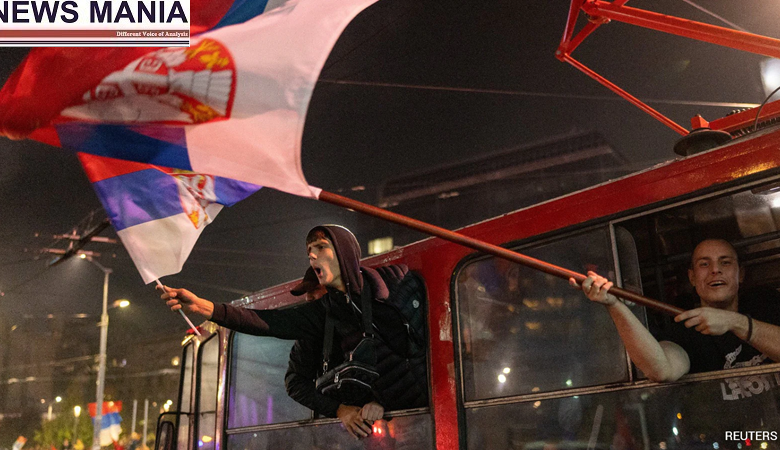
After a student-backed movement won a historic election that ended Aleksandar Vucic’s 14-year rule over the country’s politics, a cardiologist, a former governor of the central bank, a professor of chemistry, and a well-known basketball player are among the individuals who could join Serbia’s parliament. According to the Center for Free Elections and Democracy, the Student List movement is expected to receive 53% of the vote, or 141 seats in Serbia’s 250-member parliament. According to a report in The Guardian, Vucic’s Serbian Progressive Party received roughly 39% of the vote.
Beyond the scope of its success, however, the movement’s list of candidates is notable for another reason: it prioritizes public standing, professional experience, and academic credentials over traditional political experience.
The Guardian reports that over 160 of its 250 applicants have PhDs. Surprisingly, none of the applicants are students. Students who spearheaded a national movement calling for openness, accountability, and an end to corruption chose them. Professionals from a variety of areas that are rarely represented so strongly on a single election ticket are brought together by the political movement.
The political movement is led by Ilija Srdanovic, a cardiologist and professor at the University of Novi Sad. From 2010 to 2012, economist Dejan Soskic presided over Serbia’s central bank. Radomir Saicic is a member of the Serbian Academy of Sciences and Arts and a professor of chemistry at the University of Belgrade.
The list also includes sociologist Jovo Bakic, who is well-known for criticizing the departing administration, and former Serbian basketball player Dejan Bodiroga, who is currently president of EuroLeague Basketball.
Political parties use pre-existing party structures to choose candidates in the majority of parliamentary democracies. Prominent posts are typically held by senior politicians, party leaders, and seasoned MPs, and leadership, party philosophy, and policy promises are crucial to election campaigns.
The Student List of Serbia has chosen a different approach. The protest organizers, who were students, chose a slate that was predominately composed of public people and well-known professionals, many of whom had electoral political expertise. Another peculiarity is its non-hierarchical structure. The movement has placed more emphasis on group decision-making and a shared agenda centered on combating corruption and restoring public institutions than it has on uniting around a single political figure.
This is not to say that other nations lack highly skilled legislators or political groups led by experts. Furthermore, Serbia’s strategy does not provide improved governance. The manner the candidates were put together, the movement’s minimal reliance on traditional party leadership, and the prominence of professionals and academics on its election slate are what set it apart. Although its final makeup and the credentials of those chosen will need to be verified, the outcome might make the new parliamentary group among the most highly educated in Europe.
The emergence of the Student List also poses a challenging question: Is it possible for a movement based on professional knowledge and protest to function as a government? The political stability of Serbia, the biggest economy in the Western Balkans, as well as its ties to China, Russia, and the European Union, its biggest trading partner, will be determined by the responses.