
NASA Ends Swift Observatory Mission After More Than 20 Years of Cosmic Discoveries
News Mania Desk/ Piyal Chatterjee/ 30th October 2026

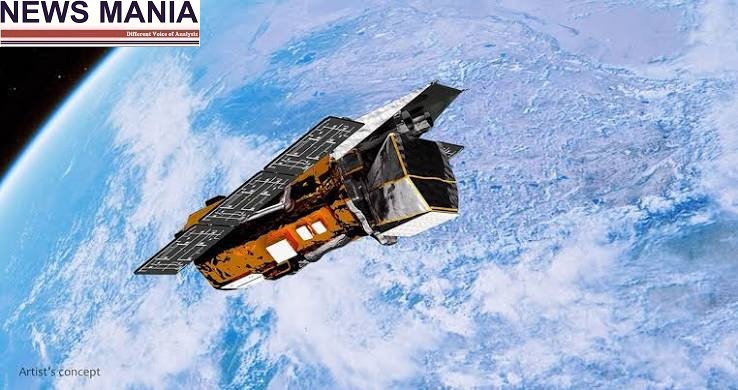
The National Aeronautics and Space Administration (NASA) has ended the science mission of its Neil Gehrels Swift Observatory, bringing to a close more than two decades of observations that transformed scientists’ understanding of powerful cosmic explosions and distant astronomical objects.
The spacecraft made its final scientific observation on October 20, 2026, after atmospheric drag lowered its orbit to less than 171 miles (275 kilometres) above Earth. NASA expects the observatory to re-enter Earth’s atmosphere in the coming weeks, marking the end of a mission that significantly exceeded its original operational expectations.
Launched on November 20, 2004, NASA’s Swift mission was initially designed to operate for two years. However, the observatory continued functioning for more than 20 years, providing valuable data on gamma-ray bursts, black holes, supernovae, active galaxies and other celestial phenomena.
Swift became particularly important for detecting gamma-ray bursts, extremely energetic explosions associated with some of the universe’s most violent events. Its ability to rapidly identify these bursts and direct its telescopes towards their locations enabled astronomers to study their afterglows before the signals faded. The observatory’s instruments also helped researchers investigate black holes and other energetic objects, expanding knowledge of how matter behaves under extreme conditions. Its observations contributed to research across multiple areas of astrophysics.
According to NASA, Swift’s scientific legacy includes approximately 7,000 research papers. The mission has also left behind an extensive archive containing nearly 22 years of observations, which scientists can continue analysing to investigate questions that remain unanswered.
The conclusion of the Swift Observatory mission represents the end of a significant chapter in space-based astronomy. Its long operational life and extensive scientific contributions demonstrate how sustained observations can deepen understanding of the universe and provide opportunities for discoveries long after a mission ends.