4.1-Billion-Year-Old Martian Meteorite Found in Sahara Desert Offers Clues to Ancient Water on Mars
News Mania Desk/ Piyal Chatterjee/ 2nd November 2026

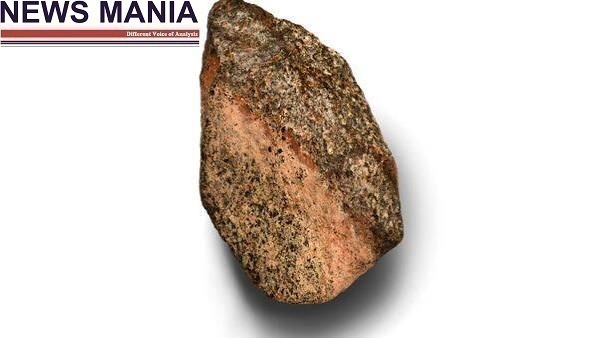
An unusual pinkish rock discovered in the Sahara Desert in 2022 has provided scientists with fresh insights into the ancient history of Mars. Researchers have confirmed that the 800-gram specimen, identified as Teghaza 001, originated on Mars more than 4.1 billion years ago and preserves evidence of the planet’s early interaction with water.
The discovery is significant because the meteorite offers a rare opportunity to study the geological conditions that existed on Mars during its earliest stages. Scientists believe that examining its mineral composition could help explain how the planet’s crust developed and how water influenced its geological evolution.
The research, supported by NASA funding, involved advanced techniques to determine the meteorite’s age and identify the chemical changes preserved within it. Researchers used rubidium-strontium dating to analyse individual mineral grains while limiting damage to the valuable specimen. Zircon crystals found in the rock also provided important information about its geological history.
The analysis revealed evidence of water-rock interactions in the Martian crust approximately 4.1 billion years ago. Such findings suggest that ancient Mars experienced geological processes involving liquid water, offering further clues about the planet’s potentially habitable past.
Scientists also compared the meteorite’s mineral characteristics with observations collected by NASA’s Mars Reconnaissance Orbiter. This helped them identify 13 possible locations on Mars from which the rock could have originated, although its exact birthplace remains uncertain.
Teghaza 001 is among the oldest Martian meteorites identified on Earth. Scientists say its composition provides an important record of the planet’s early volcanic activity and geological transformation.
The findings, published in the journal Science add to growing scientific evidence that Mars once had conditions significantly different from its present cold and dry environment. Although the discovery does not establish that life existed on the planet, it offers valuable clues about the availability of water during its ancient past.