Seven Killed in Pakistan-Occupied Kashmir as Security Forces Use Drones, Heavy Weapons Against Protesters
News Mania Desk/ Piyal Chatterjee/ 6th November 2026

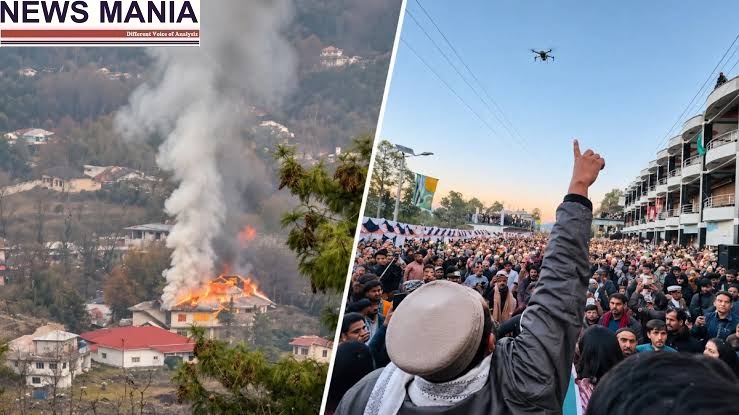
At least seven people have been killed and 23 others injured during a fresh security crackdown in Pakistan-occupied Kashmir (PoK), as Pakistani authorities intensify efforts to suppress ongoing protests. Security personnel reportedly used drones and heavy weapons during an operation against demonstrators in Rawalakot, raising concerns over the escalating violence in the region.
The operation was launched on November 5, involving the Pakistan Rangers, Frontier Corps personnel and local police. According to reports, security forces targeted protest sites and residential areas using drones, while rocket-propelled grenades and other heavy weapons were allegedly deployed during the crackdown. The latest casualties have further intensified tensions between protesters and the Pakistani administration.
The reported deaths come amid a prolonged protest movement led by the Jammu Kashmir Joint Awami Action Committee (JAAC), a coalition demanding political, economic and administrative reforms in the region. Demonstrations have continued despite government efforts to contain the unrest through arrests, security deployments and restrictions on communication.
According to reports, the latest fatalities have taken the death toll linked to the unrest in Pakistan-occupied Kashmir to 153 since June 7. At least 23 people were also injured in the latest violence, although independent verification of the casualty figures has remained difficult because of restrictions on communication and media access.
The JAAC protest movement has been pressing authorities to address a range of public grievances, including high electricity costs, rising living expenses, unemployment and inadequate public services. Its demands are outlined in a 38-point charter seeking greater political representation, economic relief and administrative autonomy.
Among the major demands are subsidised wheat supplies, affordable electricity, better healthcare facilities, improved educational infrastructure and increased employment opportunities for local residents. Protesters have also called for changes to the region’s political and administrative arrangements.
The Pakistani government’s response has drawn criticism from protesters and rights advocates, who have raised allegations of intimidation, enforced disappearances and restrictions on freedom of expression. The reported use of drones and heavy weapons has added another dimension to concerns about the handling of the demonstrations.
Despite security operations and restrictions, the protest movement has continued to attract support from students and residents across the region. The situation in PoK remains volatile as authorities face mounting pressure to address protesters’ demands while attempting to restore order.