Delhi AQI Remains in Very Poor Category at 364, Pollution Concerns Rise Ahead of Diwali
News Mania Desk/ Piyal Chatterjee/ 8th November 2026

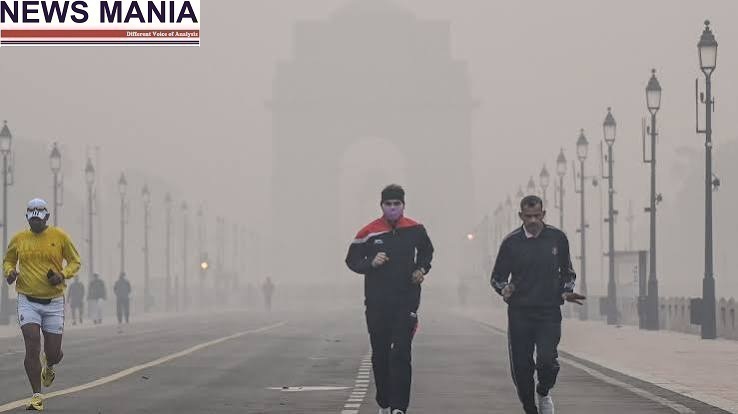
Delhi’s air quality remained in the very poor category on Saturday, November 7, with the national capital recording an Air Quality Index (AQI) of 364 amid growing concerns over rising pollution ahead of Diwali. Several monitoring stations across the city reported unhealthy pollution levels, while authorities warned that air quality could deteriorate further in the coming days.
According to data from the Central Pollution Control Board (CPCB), Delhi’s AQI stood at 364 at 9 am on Saturday. This was slightly lower than the 24-hour average of 382 recorded at 4 pm on Friday. Despite the marginal improvement, pollution levels continued to remain significantly above the safe limits, raising concerns about the health risks faced by residents.
The situation was particularly worrying in several parts of the capital. Of the 59 air quality monitoring stations operating across Delhi, 18 recorded AQI readings in the severe category on Saturday morning. The widespread deterioration highlighted the challenge of controlling pollution as the city entered the festive period.
The Air Quality Early Warning System forecast that Delhi’s air quality could slip into the severe category over the next few days. The possibility of further deterioration has raised concerns that emissions from firecrackers during Diwali celebrations could add to the existing pollution burden. Weather conditions and limited dispersion of pollutants could also contribute to the worsening situation.
In response to the deteriorating conditions, the Commission for Air Quality Management (CAQM) had implemented Stage III restrictions under the Graded Response Action Plan (GRAP) across Delhi-NCR. These measures are intended to reduce emissions from construction activities, industrial operations and other pollution-generating sources.
The Delhi government has also introduced measures to limit children’s exposure to polluted outdoor air. The Directorate of Education directed government and private schools to conduct classes up to Class 5 in hybrid mode, allowing students to attend lessons either physically or online. The decision aims to provide flexibility to parents concerned about the health effects of poor air quality.
Meanwhile, weather conditions offered little immediate relief. The India Meteorological Department (IMD) reported that Safdarjung recorded a minimum temperature of 16.2 degrees Celsius, around 1.9 degrees below the seasonal average. Mostly clear skies were forecast over the next few days.
Under CPCB classification, an AQI between 301 and 400 falls in the very poor category, while readings between 401 and 500 are considered severe. Prolonged exposure to very poor air can cause respiratory discomfort and aggravate existing health conditions. With Delhi air pollution remaining a major concern ahead of Diwali, authorities face the challenge of preventing a further deterioration in air quality as the festive celebrations approach.