NASA’s Voyager 1 reaches one-light-day distance from Earth, continues its interstellar journey
News Mania Desk/ Piyal Chatterjee/ 20th November 2026

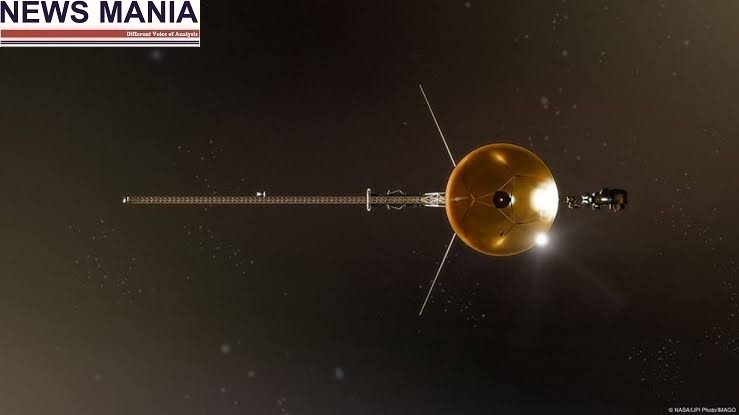
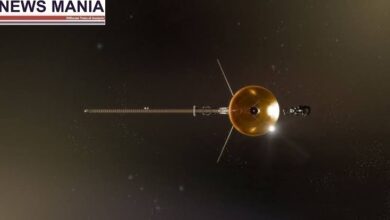
NASA’s Voyager 1 spacecraft has reached a historic milestone by travelling a distance of one light-day from Earth, becoming the first human-made object to achieve the feat. The spacecraft crossed the threshold on November 18, marking another remarkable achievement in its nearly five-decade journey through space.
Voyager 1 is now approximately 16.1 billion miles, or 25.9 billion kilometres, from Earth. At this distance, radio signals travelling at the speed of light take nearly 24 hours to reach the spacecraft or return to Earth, highlighting the growing communication challenges faced by mission controllers.
Launched in September 1977, Voyager 1 has spent more than 49 years exploring the outer reaches of the Solar System and beyond. It crossed into interstellar space in 2012, becoming the first spacecraft to enter the region beyond the heliosphere, the protective bubble formed by the Sun’s solar wind.
Despite its extraordinary journey, the spacecraft has recently encountered technical difficulties. Voyager 1 has stopped transmitting scientific and engineering data, although it continues to maintain communication with Earth. NASA engineers are working to restore its data transmission capabilities while managing the spacecraft’s ageing systems. The probe operates using a plutonium-powered energy source, whose output gradually declines over time. To conserve electricity and extend the mission’s lifespan, NASA has progressively shut down several instruments and systems aboard the spacecraft.
Mission officials hope that these power-saving measures could enable Voyager 1 to remain operational for another three to four years, allowing it to continue transmitting valuable information from interstellar space. Voyager 1’s twin spacecraft, Voyager 2, also continues its journey beyond the Solar System. Launched in the same year, it entered interstellar space in 2018 and is expected to reach the one-light-day distance from Earth around 2035.