Scientists successfully grow potatoes in simulated lunar soil, offering hope for Moon farming
News Mania Desk/ Piyal Chatterjee/ 21st November 2026

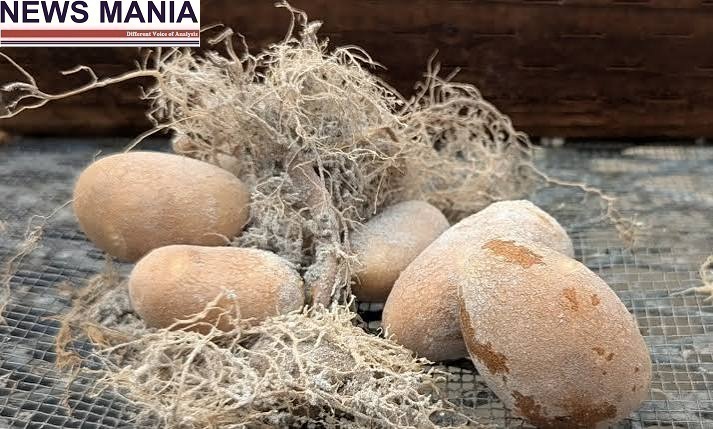
Scientists have successfully grown potatoes in simulated lunar soil, marking a potential breakthrough in developing sustainable food production systems for future Moon missions. The experiment suggests that lunar soil-like material, when supplemented with organic nutrients, could support the cultivation of crops needed by astronauts during extended space missions. The research, supported by NASA and conducted by scientists at Oregon State University, explored whether potatoes could grow in lunar soil simulants designed to replicate the physical and chemical characteristics of Moon soil. The findings were published in the scientific journal Microgravity on November 19.
Researchers experimented with lunar soil simulants supplemented with vermicompost, an organic material produced through the decomposition of waste by earthworms. The addition of organic nutrients helped improve the growing conditions, enabling potato plants to develop in the simulated lunar environment.
The study is significant because lunar soil, known as regolith, differs considerably from terrestrial soil. It lacks organic matter, contains potentially harmful substances and presents challenges for growing plants. Developing methods to cultivate crops in such material could help astronauts produce food locally rather than relying entirely on supplies transported from Earth.
Potatoes have attracted scientific interest because they are nutrient-rich crops that can provide carbohydrates and other essential dietary components. Their ability to grow under controlled conditions could make them useful for future space-based agricultural systems. Researchers believe the findings could contribute to efforts to establish sustainable human settlements on the Moon, where food production, resource management and reducing dependence on Earth-based supplies will be crucial.
Although the experiment used simulated lunar soil rather than actual Moon samples, it represents an encouraging step towards understanding how agriculture might function in extraterrestrial environments. Further research will be required to determine whether crops can be cultivated safely and efficiently using real lunar materials.