
West Bengal to Unveil New Industrial Policy on Independence Day, Announces Finance Minister Dr Swapan Dasgupta
Buddhadeb Misra/ 18th July 2026

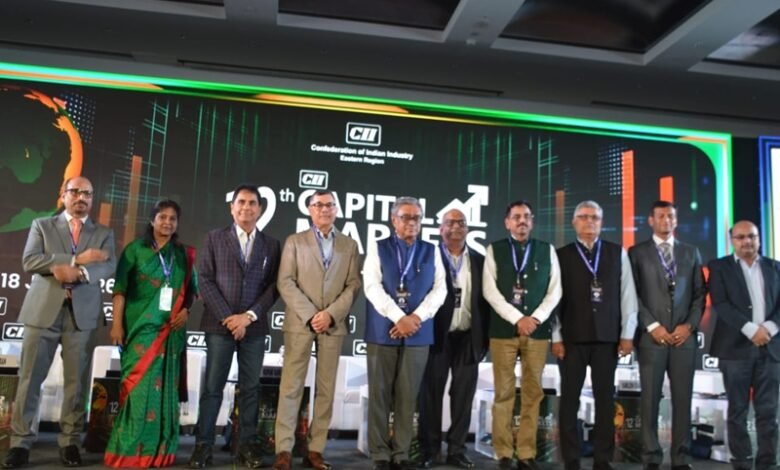
Kolkata, July 18, 2026: The Government of West Bengal will unveil its new Industrial Policy on Independence Day (August 15, 2026), with a strong focus on fiscal incentives, investment promotion, and employment generation, announced Dr Swapan Dasgupta, Minister-in-Charge, Department of Finance, Government of West Bengal, while addressing the 12th Capital Market Conclave in Kolkata.
The announcement comes as the State Government intensifies efforts to revive industrial growth, attract fresh investments, and strengthen West Bengal’s position as a preferred business destination in Eastern India.
New Industrial Policy to Prioritise Fiscal Incentives
Speaking at the conclave, Dr Dasgupta said the forthcoming industrial policy will place significant emphasis on providing fiscal incentives to industries and creating a more investor-friendly environment.
He also stressed the urgent need for a comprehensive land policy, particularly focusing on the productive reuse of land belonging to closed or idle factories.
“West Bengal possesses an abundant pool of skilled human resources. However, due to the lack of sufficient employment opportunities, many talented individuals are compelled to leave the State in search of work, effectively becoming economic refugees. Our priority is to build a conducive ecosystem that attracts investment, generates employment, and retains talent within West Bengal,” the Finance Minister said.
Reviving Eastern India’s Economic Leadership
Highlighting the region’s declining contribution to the national economy, Mr Vijay Kedia, Managing Director of Kedia Securities Pvt. Ltd., observed that Eastern India once contributed nearly 21% of India’s GDP during the 1960s, but that share has now fallen to around 12%.
He emphasized that increasing the number of listed companies from Eastern India is essential for expanding capital markets and restoring the region’s economic prominence.
SMEs to Drive the Next Wave of Capital Market Growth
Mr Krishnan Iyer, Senior Vice President and Head – Issuer Relationships at NSE India Ltd., noted that India’s financial ecosystem has evolved from being bank-driven to market-driven.
He predicted that the next phase of capital market expansion will be led by Small and Medium Enterprises (SMEs), which are increasingly accessing equity markets for growth capital.
Capital Markets Key to India’s Growth Story
Addressing the conclave, Ms Geetha Gangadharan, Chief Regulatory Officer of BSE India Ltd., highlighted India’s projected 6.5% economic growth, which continues to outperform many major global economies.
She said that trust, transparency, and sound corporate governance remain the foundation of sustainable capital markets, while global capital markets can play a crucial role in financing India’s future growth.
SEBI Expands Presence in Eastern India
Mr Kamlesh Chandra Varshney, Whole-Time Director of the Securities and Exchange Board of India (SEBI), announced the establishment of local offices in Bhubaneswar and Guwahati, along with a regional office in Patna, strengthening the regulator’s presence across Eastern India.
He noted that over the last four to five years, India has witnessed remarkable growth in:
- Demat accounts
- Mutual fund investments
- IPO participation
According to him, West Bengal has consistently contributed nearly 5% to these national growth trends.
Geopolitical Challenges Continue to Influence Markets
Mr Rupak Barua, Chairman of the CII West Bengal State Council and Managing Director & CEO of Woodlands Multispeciality Hospital Ltd., spoke about the impact of global geopolitical developments on financial markets.
He pointed to the continuing crisis in West Asia, rising crude oil prices, inflationary pressures, and the depreciation of the Indian Rupee against the US Dollar as key factors contributing to market volatility.
Household Savings and Capital Markets
Mr Bijay Murmuria, Chairman of the CII Eastern Region Financial Services Subcommittee and Director of Sumedha Fiscal Services Ltd., highlighted the growing importance of capital markets in regional development.
He said household financial savings have increased from 20% to 21.5% of GDP, underlining the expanding role of capital markets in mobilising investments and accelerating economic growth across Eastern India.
Industry Report Released
During the conclave, CII released a report titled:
“Capital Markets and the Future of Eastern India’s Industrial Growth.”
The report examines how stronger capital markets can support industrial expansion, improve access to finance for businesses, and accelerate economic development across the eastern region.
Key Takeaways
- New Industrial Policy to be unveiled on August 15, 2026
- Strong focus on fiscal incentives for industries
- Comprehensive land policy proposed for idle industrial land
- Greater emphasis on employment generation and investor-friendly reforms
- SMEs expected to drive the next phase of capital market growth
- SEBI expanding its footprint in Eastern India with new regional offices
- CII releases report on the future of Eastern India’s industrial growth
News Mania Analysis
The announcement of a new Industrial Policy on Independence Day signals the West Bengal Government’s intent to accelerate industrialisation through investor-friendly reforms, fiscal incentives, and improved land utilisation. Combined with efforts to strengthen capital markets, encourage SME participation, and address skilled workforce migration, the policy could mark a significant step toward enhancing the State’s competitiveness and positioning West Bengal as a major investment and manufacturing hub in Eastern India.00 crore expansion, the State is positioning itself to become a leading manufacturing destination in Eastern India. If implemented effectively, these reforms could significantly enhance investor confidence, create employment opportunities, and strengthen West Bengal’s role in India’s evolving industrial and export landscape.