Morale Concerns Emerge Among US Troops as Washington and Tehran Clash Over Hormuz Control
News Mania Desk/ Piyal Chatterjee/ 14th August 2026

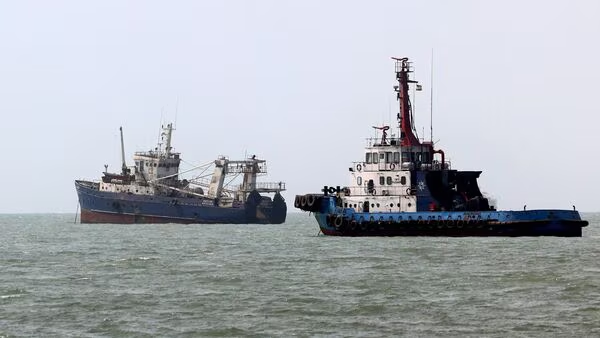
Concerns over troop morale have surfaced within the US military’s Middle East deployment as the conflict with Iran continues, even as President Donald Trump maintains that the United States has full control of the strategically vital Strait of Hormuz.
Reports highlighting conditions aboard the aircraft carrier USS Abraham Lincoln have drawn attention to the strain on sailors after months of deployment in the region. The vessel, which was deployed from San Diego in November 2025 and reached the Middle East in January 2026, has been operating in support of US military actions linked to the ongoing confrontation with Iran.
According to reports cited by US media, crew members have faced extended periods at sea, limited port visits and disruptions to regular supply chains due to the conflict. The US Navy acknowledged that military operations in the region created a highly contested environment, affecting the delivery of supplies and mail to personnel aboard the carrier. However, officials said steps had been taken to ensure access to food, clean water and other essential services for sailors.
US Defence Secretary Pete Hegseth dismissed suggestions that conditions aboard the Lincoln had deteriorated significantly, arguing that some reports had exaggerated the situation. He praised the service of naval personnel and said military leadership was committed to providing crews with the support needed to carry out their missions despite challenging circumstances.
The debate over troop welfare comes amid heightened tensions between Washington and Tehran over the Strait of Hormuz, one of the world’s most important energy shipping routes. President Trump recently asserted that the United States had “total control” over the waterway and pledged to maintain that position as the conflict continues.
Iran, however, has strongly rejected the claim. Iranian officials have insisted that the strait remains under Tehran’s authority and that no vessel can transit the route without its approval. The competing claims have underscored the broader struggle for influence over the crucial maritime corridor.
The ongoing conflict has disrupted commercial shipping and contributed to uncertainty in global energy markets. With diplomatic efforts yet to produce a lasting breakthrough, military operations remain active, raising concerns about the duration of the deployment and the pressures facing US service members stationed in the region.