
Why Some Parents Still Cover Schoolbooks in Brown Paper, According to Psychology
News Mania Desk/ Piyal Chatterjee/ 17th September 2026

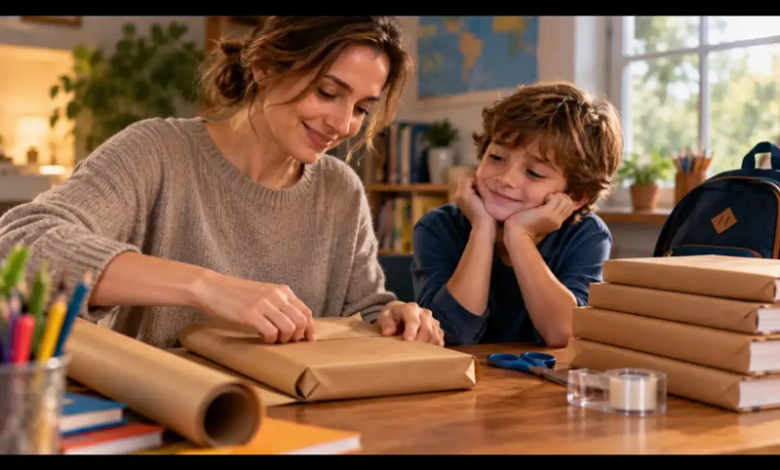
For many parents, covering schoolbooks and notebooks with brown paper is a familiar part of preparing for a new academic year. While the practice was once largely associated with protecting books from wear and tear, it continues in many households even when easier and more durable alternatives are available.
The tradition has increasingly become less about the practical purpose of protecting textbooks and more about routine, familiarity and nostalgia. Parents who grew up covering their own schoolbooks may repeat the practice when their children begin school, turning a once-functional task into a ritual connected with their own childhood experiences.
Psychology suggests that rituals can provide a sense of familiarity and continuity. Repeating activities associated with important stages of life can help people reconnect with memories and emotions from the past. For parents, preparing a child’s books may therefore evoke memories of their own school days and the routines followed by their families.
The practice can also create a sense of order at the beginning of a new school term. Covering books, writing names on labels and arranging school supplies are small, structured tasks that mark the transition from holidays to the academic routine. Such repeated behaviours can become meaningful family traditions over time.
The continued practice does not necessarily mean parents are unaware of modern alternatives. Instead, some may simply prefer maintaining a familiar tradition that has emotional value. A task that once served a straightforward practical purpose can gradually acquire symbolic significance through repeated family experiences.
As children return to school each year, the ritual of covering books can therefore represent more than protecting pages and covers. For some families, it becomes a small connection between generations, allowing parents to recreate a familiar part of their own childhood while preparing their children for a new school year. Psychology broadly recognises that rituals and repeated behaviours can carry emotional and social meaning beyond their immediate practical function.