
Speaking at the UPSC centennial celebrations in New Delhi, PM Modi claims that India’s 21st-century work culture is based on pro-people, pro-active, and good governance.
News Mania Desk/ Piyal Chatterjee/ 2nd October 2026

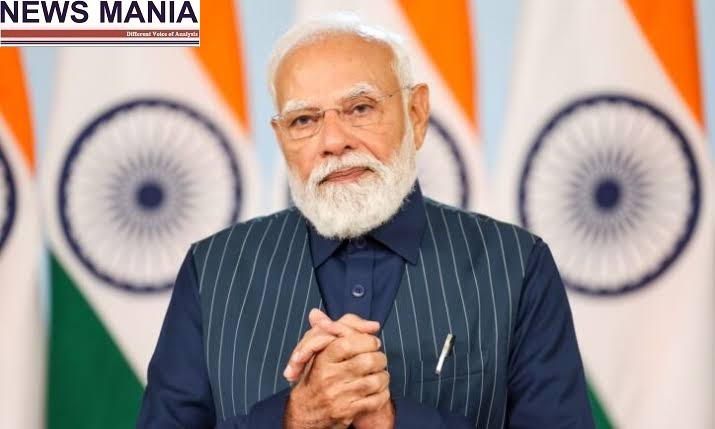
The nation is moving quickly on the Reform Express, according to Prime Minister Narendra Modi, and the institutions that administer exams must likewise work on the reforms that the nation needs. Speaking at the Union Public Service Commission’s (UPSC) Centennial Celebrations today at Bharat Mandapam in New Delhi, Mr. Modi stated that a test should not be viewed as merely an occasion because it affects the future of young people.
Mr. Modi stated that the examination system should adhere to the time certainty concept because even a few months’ delay might cause problems for young people. According to Prime Minister Narendra Modi, despite changes in administrations, generations, technology, and curricula over the course of UPSC’s 100-year history, public confidence in the institution has remained constant.
Mr. Modi emphasized the need of attracting young people who are motivated to public service rather than public office. According to him, India is developing a new work culture in the twenty-first century, with pro-people, pro-active, and good governance as its guiding principles.
The prime minister stated that serving the people is of utmost importance and that Nagarik Devo Bhava is his government’s motto. According to him, organizations like the UPSC and the State Public Service Commissions would play a major role in enabling the kind of governance that the nation currently need for a Viksit Bharat. According to Mr. Modi, the young people being hired today will be crucial to creating a Viksit Bharat.
India in 2047 will be considerably different from the India of today, according to Prime Minister Modi. According to him, India will become more urbanized, there will be less of a divide between rural and urban areas, and people’s hopes and aspirations—particularly those of the younger generation—would be significantly higher. For every Indian and every institution in the nation, he continued, the next 20 to 25 years will be crucial.
Minister of State for Pensions, Public Grievances, and Personnel According to Dr. Jitendra Singh, over the past twelve years, UPSC has introduced numerous new dimensions and reached a number of milestones. According to him, there are now more government positions made through UPSC, and the recruitment process is now more transparent, which boosts public confidence.
Dr. Singh pointed out that during the NDA’s 12-year term, almost 65,000 posts were made through the UPSC, but during the UPA’s ten-year term, about 45,000 appointments were made. According to the Minister, UPSC is now a model for recruitment firms both domestically and internationally.
Since independence, generations of young people from the country have come to the Commission’s door with aspirations to serve their country, and UPSC has made sure that they are evaluated only on the basis of merit, according to UPSC Chairman Dr. Ajay Kumar. According to him, women currently make up about 30% of those who pass the Civil Services Examination.
According to Dr. Kumar, the Commission has recently taken steps to further strengthen security and fairness, including the use of artificial intelligence to identify duplicate applications, real-time OCR-based evaluation of millions of documents uploaded by candidates, and face authentication for lakhs of candidates at exam centers.