India is prepared for an energy shock, and the PM warns of difficult times to come.
News Mania Desk/ Piyal Chatterjee/23rd March 2026

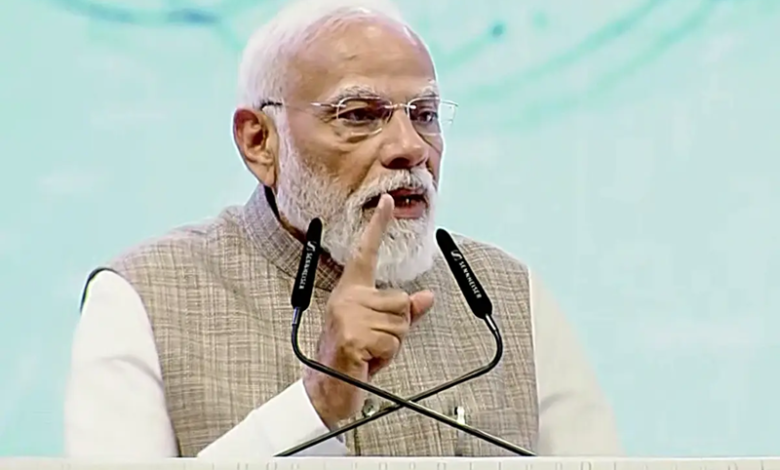
Prime Minister Narendra Modi claimed on Monday that India is still energy-secure, supported by a 53 lakh metric tonne strategic petroleum reserve and a diverse import network spanning 41 nations, despite growing tensions in West Asia and worries about supply disruptions through the crucial Strait of Hormuz. The nation is currently aiming to increase its reserves to 65 lakh metric tonnes, he continued.
“In the last decade, India has prioritised the storage of crude oil for times of crisis. Today, we have a strategic petroleum reserve of over 53 lakh metric tonnes, and work is underway to increase this to more than 65 lakh metric tonnes,” the Prime Minister told the Lok Sabha.
Highlighting efforts to reduce vulnerability, PM Modi said India has significantly diversified its energy import sources. “Earlier, we imported from 27 countries; today, we import energy from 41 countries,” he noted.
The Prime Minister underlined that strengthening domestic preparedness has been a key focus. “Our refining capacity has also increased… Over the past decade, we have prioritised crude oil storage. We now have a robust strategic petroleum reserve,” he said, adding that India’s refining capacity has also expanded.
“We are in constant touch with multiple countries to ensure steady supplies of oil and gas,” he said.
However, PM Modi acknowledged that the ongoing conflict has posed unprecedented, multi-dimensional challenges for India. “This war has created unforeseen challenges — economic, national security-related, and humanitarian. India has deep trade ties with countries involved in and affected by the conflict. The region is also a crucial route for our global trade, and a significant portion of our crude oil and gas imports pass through it,” he said.
He also condemned attacks on commercial vessels in key international waterways. “Attacks on commercial ships and disruptions in routes like the Strait of Hormuz are unacceptable. Through diplomatic efforts, India is working to ensure the safe passage of its vessels even in this volatile environment,” he added.
The Prime Minister added, “A large portion of crude oil, gas, fertiliser and many other energy sources come through the Strait of Hormuz, and despite the blocking of this route, we are ensuring that our needs are met”.
The Prime Minister emphasized that India is successfully managing its energy demands in spite of the disruptions. “A large share of crude oil, gas, fertilisers and other essential imports come through the Strait of Hormuz. Even with disruptions, we are ensuring uninterrupted supply,” he said, adding that household energy security remains a priority, with India importing nearly 60 per cent of its LPG requirements.
Nearly one-fifth of the world’s oil and gas supply goes through the small mouth of the Persian Gulf, the Strait of Hormuz, which Iran has effectively shut. Traffic has almost stopped since Iran allegedly targeted over 20 ships, despite Tehran’s claim that the strait is solely open to the US and its allies. Iran has warned that oil prices could reach USD 200 after rising sharply from USD 75 to USD 100 per barrel.