How the US strike on Iran Navy’s IRIS Dena exposed Pakistan’s misinformation campaign against India
News Mania Desk/ Piyal Chatterjee/20th March 2026

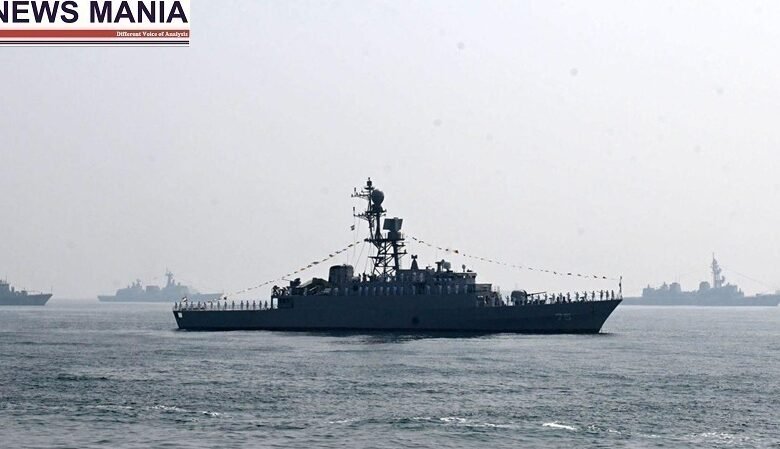
According to thorough open-source intelligence assessments, a coordinated disinformation effort purportedly coming from Pakistan-based networks aimed to damage India’s diplomatic status by taking advantage of a recent maritime incident involving the United States and Iran. The incident in question is the attack on the Iranian Navy’s frigate IRIS Dena, which the United States attacked and sank off the coast of Sri Lanka on March 4.
According to US Defense Secretary Pete Hegseth, the strike showed that Iranian ships were unsafe even in international seas. Periscope footage of the impact was made public. Although naval warfare law allows attacks on enemy warships without prior notice if there are no obvious surrender signs, the frigate had no chance to surrender, and discussions about whether warnings were given continue.
According to sources acquainted with the situation, a narrative accusing India of sharing critical information with the United States quickly propagated on social media platforms shortly after the sinking. Analysts strongly disagreed with this notion.
“Almost immediately after the incident, a coordinated disinformation campaign emerged on social media under the hashtag #IndiaBetraysIran, falsely alleging that India had leaked the frigate’s coordinates or location data to the United States, enabling the attack. Analysis by Indian OSINT groups and threat intelligence platforms traced the campaign’s origin to a March 4 post by the account @TacticalTribun, an account with a history of frequent username changes suggestive of malicious intent,” the said
They claimed that almost 40% of the narrative originated from Pakistan-based individuals and networks, followed by contributions from Iran-aligned, Middle Eastern, African, and Southeast Asian clusters. The narrative expanded quickly through manual amplification by distinct accounts (not entirely algorithmic). They pointed out that the campaign combined real user interaction with planned amplification strategies, exhibiting characteristics of coordinated hybrid information warfare.
“Over 500 posts from more than 100 identified accounts reached an estimated cumulative exposure of 50,000-100,000 views in the initial phase, with some individual posts achieving viral reach exceeding 900,000 impressions,” according to national security officials.
Open-source intelligence assessments found that the campaign exhibited characteristics of a coordinated hybrid disinformation operation, combining organic sentiment with inauthentic amplification.
“Key propagation followed a hub-and-spoke network structure: the origin post was rapidly replicated by primary amplifiers within 3-6 hours, followed by secondary amplification across 80+ accounts through quote tweets, replies, and hashtag clustering. Notably, high-engagement visual content-such as images of IRIS Dena with Iranian flags and unrelated naval footage-significantly outperformed text-based posts, indicating deliberate emotional manipulation tactics,” the people familiar with the matter said.
Further breakdowns revealed layered participation across different types of accounts, suggesting structured coordination behind the campaign.
“Further analysis identified structured layers of participation, including originators, high-reach amplifiers, mid-tier ideological networks, and low-reach “sockpuppet” accounts. The campaign also demonstrated moderate-to-high indicators of coordinated inauthentic behavior, including verbatim content duplication, synchronized posting patterns, rapid hashtag emergence, and abnormal engagement spikes. Bot-amplification risk was assessed as moderate-high, though the campaign remained a hybrid ecosystem involving both real users and coordinated actors.”
The narrative gained traction across multiple ideological groups, amplifying its reach beyond its original source.
“A key feature of the campaign was its multi-ideological amplification, where distinct groups-including Pakistan-based networks (~35-40%), pro-Iran actors (~15-18%), pro-Palestine clusters (~12%), Western anti-war communities (~8%), China-aligned accounts (~5%), and even sections of Indian domestic political opposition (~8%)-amplified the narrative through their own ideological lenses. This convergence created a self-reinforcing “narrative ecosystem,” allowing a single unverified claim to gain cross-regional traction.”
.