Iran sets strict conditions for a truce, including the closure of US outposts and transit costs in Hormuz.
News Mania Desk/ Piyal Chatterjee/25th March 2026

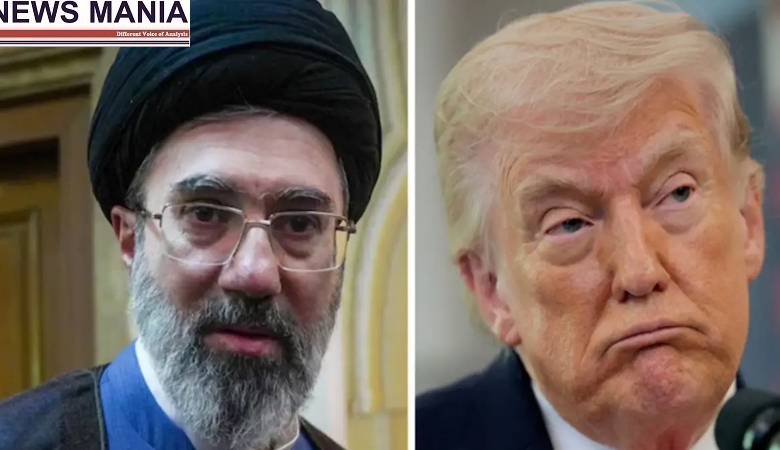
Iran has reportedly made broad demands in response to Donald Trump’s invitation for new negotiations, including the closure of US military installations in the Gulf, the lifting of sanctions, and the acquisition of control over a vital shipping channel. This occurred at the same time that Tehran openly denied Washington’s assertions of continuing talks, claiming that an agreement between the two enemies is impossible.
Even as indirect engagement between the two parties takes shape, Tehran has reportedly communicated that the bar for reentering ceasefire negotiations is still high. Iranian delegates have advocated for the termination of Israel’s fight against Hezbollah, the closing of all US bases in the Gulf, and monetary compensation for wartime damages.
Additionally, they have looked for a framework that would enable Iran to charge ships that sail through the Strait of Hormuz, one of the most important oil transit routes in the world, taxes.
According to people familiar with the situation, these demands are being driven by the Islamic Revolutionary Guard Corps, which has cemented authority among the nation’s leadership, according to a Channel. A new agreement regulating the Strait of Hormuz, which would essentially put it under Iranian control, and strong assurances that hostilities would not return are two more essential requirements. Iran has also insisted on the lifting of all sanctions as part of any agreement to end the conflict.
There are signs that Tehran may be indicating some flexibility in private, despite the firm public stance.
Iran may think about lowering uranium enrichment levels and stopping its ballistic missile program for five years, according to a station.
It may also allow the International Atomic Energy Agency to inspect the remaining centrifuges and engage in talks on its 60% enriched uranium stockpile. According to the sources, as part of a larger agreement, Iran might also consent to cease supporting regional proxy organizations like Hezbollah, Hamas, and Iraqi militias.
Although the official position is still unwavering, these stances are being considered as possible opening movements. In a pointed attack, earlier Iranian military spokesperson Ebrahim Zolfaqari mocked the US leadership.
“The United States is negotiating with itself,” he said, according to state media. “Has the level of your inner struggle reached the stage of you negotiating with yourself?” he asked, adding, “People like us can never get along with people like you.”
Zolfaqari also warned that US economic interests would remain under pressure. “US investments and pre-war energy prices would not return as long as Washington does not accept that regional stability is guaranteed by Iranian armed forces,” he said.The conflicting signals—tough demands in public and potential compromises in private—highlight how complicated the current negotiations are. The path to any ceasefire agreement seems murky, with the stakes going well beyond the immediate fighting, as each sides push the boundaries of what the other may accept.