Supreme Court Stand on SC Status for Dalit Converts Rekindles Reservation Debate
News Mania Desk/ Piyal Chatterjee/1st April 2026

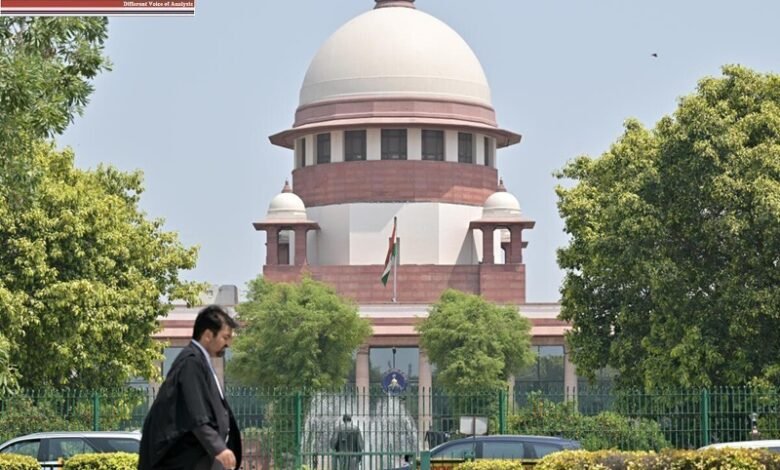
A recent observation by the Supreme Court of India has revived a contentious national debate on whether Dalits who convert to other religions should retain Scheduled Caste (SC) status and the benefits of reservation. The issue centres on the Constitution (Scheduled Castes) Order, 1950, which restricts SC recognition to individuals professing Hinduism, Sikhism, or Buddhism. The court reiterated that those who convert to religions such as Christianity or Islam are no longer eligible for SC status under the current legal framework.
The case under consideration involved a Dalit man who had converted to Christianity and sought legal protection under the Scheduled Castes and Scheduled Tribes (Prevention of Atrocities) Act. The court upheld existing provisions, ruling that conversion results in the loss of SC classification, thereby denying access to related legal safeguards.
The ruling has once again highlighted the gap between legal provisions and social realities. Critics argue that caste-based discrimination often persists even after conversion, with many Dalit Christians and Muslims continuing to face marginalisation in society. They contend that denying reservation benefits overlooks the enduring nature of caste prejudice beyond religious boundaries.
Supporters of the present framework, however, maintain that reservation policies were historically designed to address the specific injustices embedded in the Hindu caste system. From this perspective, extending SC status to converts could dilute the original intent of affirmative action policies and complicate their implementation.
The debate is not new and has been examined by several expert bodies over the years. The National Commission for Religious and Linguistic Minorities had earlier recommended extending reservation benefits to Dalit converts, arguing that social discrimination does not automatically disappear with a change in religion. Despite such recommendations, successive governments have not introduced legislative amendments to the 1950 Order.
Legal experts point out that the judiciary is bound by the existing constitutional framework, and any change to the criteria for SC status would require parliamentary action. The court’s position, therefore, reinforces the status quo while shifting the responsibility for reform to lawmakers.
The issue also raises broader questions about the basis of India’s reservation system—whether it should be determined strictly by religious identity or by continuing social disadvantage. As the discussion gains traction, it is likely to remain a politically sensitive topic, intersecting with debates on equality, religious freedom, and social justice. With the Supreme Court of India reaffirming the current legal position, attention is now expected to turn to Parliament, where any potential changes to reservation policy would need to be debated and enacted.