PM Modi Demands Support for the Women’s Reservation Bill: “Let Us Empower Nari Shakti”
News Mania Desk/ Piyal Chatterjee/9th April 2026

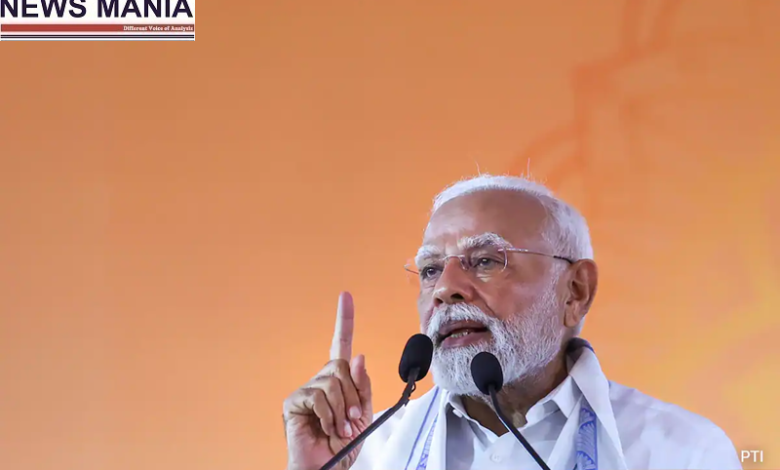
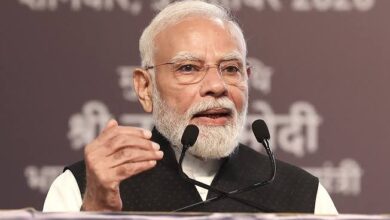
On Thursday, Prime Minister Narendra Modi called on all MPs to support the proposed changes to the Women Reservation Act, saying that they are not just a legislative exercise but also a reflection of the aspirations of crores of Indian women.
The prime minister said that the action is a confirmation of a long-standing tenet of India’s civilizational ethos—that society advances when women advance—in a signed piece published on his website narendramodi.in. According to him, it is essential that women’s reservations be implemented for the 2029 Lok Sabha elections as well as the upcoming state Assembly elections.
According to the prime minister, the country is on the verge of a momentous occasion that offers a chance to strengthen the country’s democratic foundations and reaffirm our shared commitment to equality and inclusion. According to him, Parliament will meet on April 16 to debate and approve a significant bill that advances women’s reservation. In order to revise the “Nari Shakti Vandan Adhiniyam,” also known as the Women Reservation Act, for its implementation starting with the 2029 general elections, the Budget Session of Parliament has been prolonged, and a special three-day sitting of the House has been called for April 16–18.
It will guarantee that there will be 816 Lok Sabha seats, 273 of which would be reserved. The Constitution was amended in 2023 to allow women a 33 percent reservation in the Lok Sabha and state assemblies. However, this provision will not take effect until the delimitation process based on the 2027 Census is finished. It is therefore anticipated that it will only take effect in 2034.
The number of Lok Sabha seats would rise from the current 543 to 816, with 273 seats set aside for women, according to the broad contours that are now accessible. Additionally, seats will be reserved on a “vertical basis” for SCs and STs. Instead of using the anticipated 2027 Census, the 2011 Census will be used to redraw the constituencies.
For state assemblies, a similar procedure will be used to reserve seats on a pro rata basis. PM Modi stated in the article that women make up almost half of India’s population, that they have made enormous and priceless contributions to the country, and that women are currently making outstanding progress in all spheres of life.Women are leading India’s advancement in a variety of fields, including science, technology, entrepreneurship, sports, the military, music, and the arts, he said.
According to the prime minister, persistent efforts have been undertaken throughout time to foster an atmosphere that supports women’s empowerment. “Yet, their representation in the world of politics and legislative bodies has not always been commensurate with their role in society,” he said.
He said that over the decades, there have been repeated efforts to provide women with their rightful place in democratic institutions by the previous governments. Committees were made, Bill drafts were introduced but they never saw the light of day. “But the broad consensus has remained that women’s representation in legislative bodies has to increase,” he said.
The prime minister said that in September 2023, Parliament passed the ‘Nari Shakti Vandan Adhiniyam’ with the same spirit of consensus.”I consider it to be among the most special occasions of my life. This opportunity to ensure women’s reservation also resonates deeply with the spirit of our Constitution. The makers of our Constitution envisioned a society where equality is both enshrined and realised in practice,” he said.
PM Modi said strengthening women’s participation in legislative institutions is an important step towards fulfilling that vision. “It reflects our commitment to building a society where every citizen has an equal stake in shaping the nation’s destiny. “This is a moment that cannot be deferred any longer. Every delay in advancing women’s representation is, in effect, a delay in strengthening the quality and inclusiveness of our democracy,” he said.