Meghalaya possesses ancient knowledge system: RSS Prachar Pramukh
Nava Thakuria/ 22nd April 2026

Guwahati: In pursuit of understand the essence of ancient Bharat, one must look towards the Northeast, where traditions continue to thrive in their most organic and spiritual forms, said Dr Sunil Mohanty, Assam Kshetra Prachar Pramukh of Rashtriya Swayamsevak Sangh, while delivering a comprehensive and deeply reflective address during a religious gathering in Meghalaya placing indigenous traditions of the region within the larger civilizational framework of Bharat.
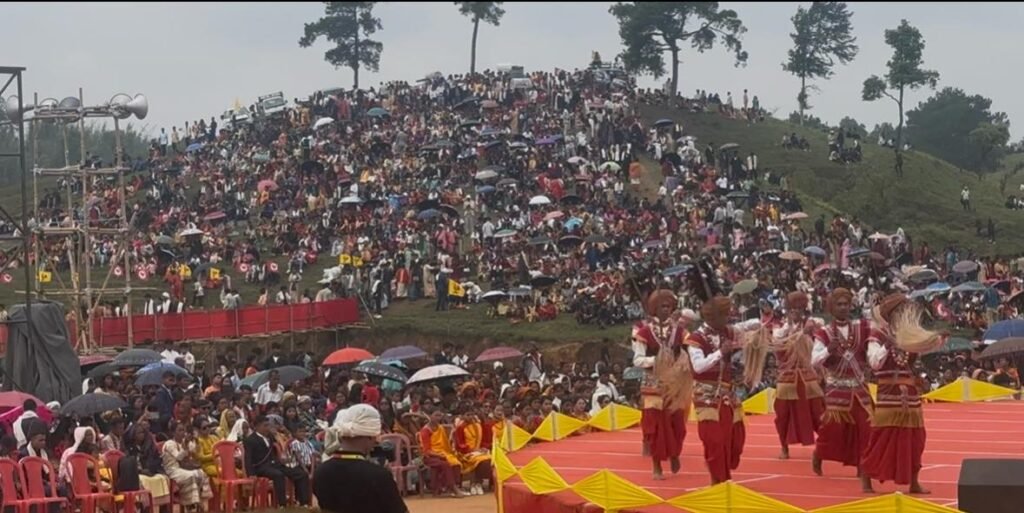
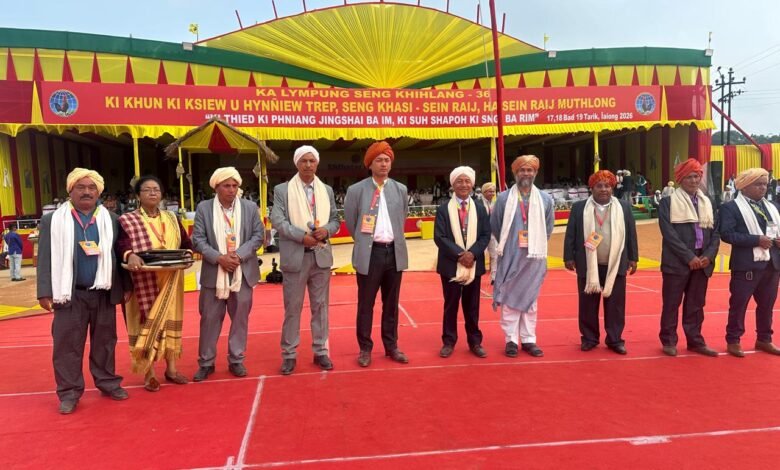
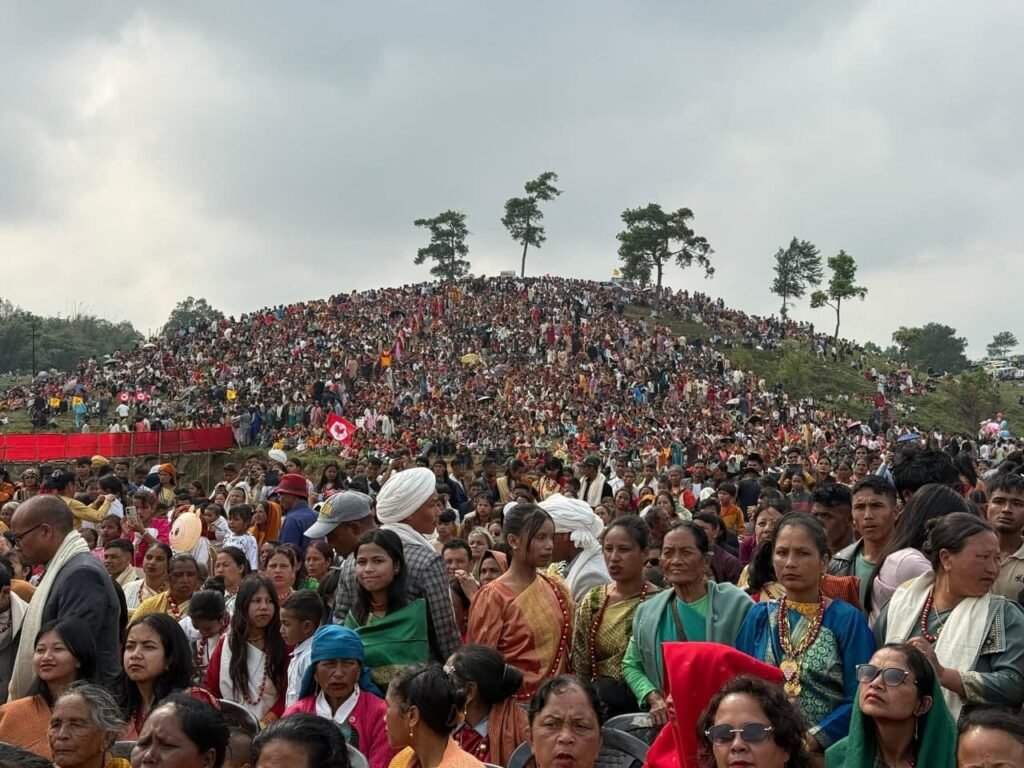
The 36th Seng Khihlang (Tien Phira / Lumphung), one of the most significant indigenous spiritual congregations of the Khasi–Pnar (Jaintia) community, held at Sein Raij Muthlong in West Jaintia Hills on 17 to 19 April 2026, attracted a huge volume of audience. Established in 1981, Seng Khihlang has grown from a small gathering of 30–40 participants into a massive spiritual congregation attended by lakhs of indigenous faith believers, symbolizing a living tradition of cultural continuity, identity, and spiritual resilience.
Recalling Meghalaya’s historical legacy, Dr Mohanty referred to early rulers such as Urmi Rani (c. 600–630 CE), Krishak Pator, Hatak, and Guhak, and stressed the importance of remembering these figures. He also highlighted the historical importance of Jaintiapur, which served as the capital of the Jaintia Kingdom until its annexation by the British in 1835. Further, he mentioned key rulers including Prabhat Ray Syiem (1500–1516), Laxmi Sinha (1670–1701), credited with constructing the Jayant Rajbadi in 1680, and the last ruler Rajendra Singh Syiem (1832–1835).
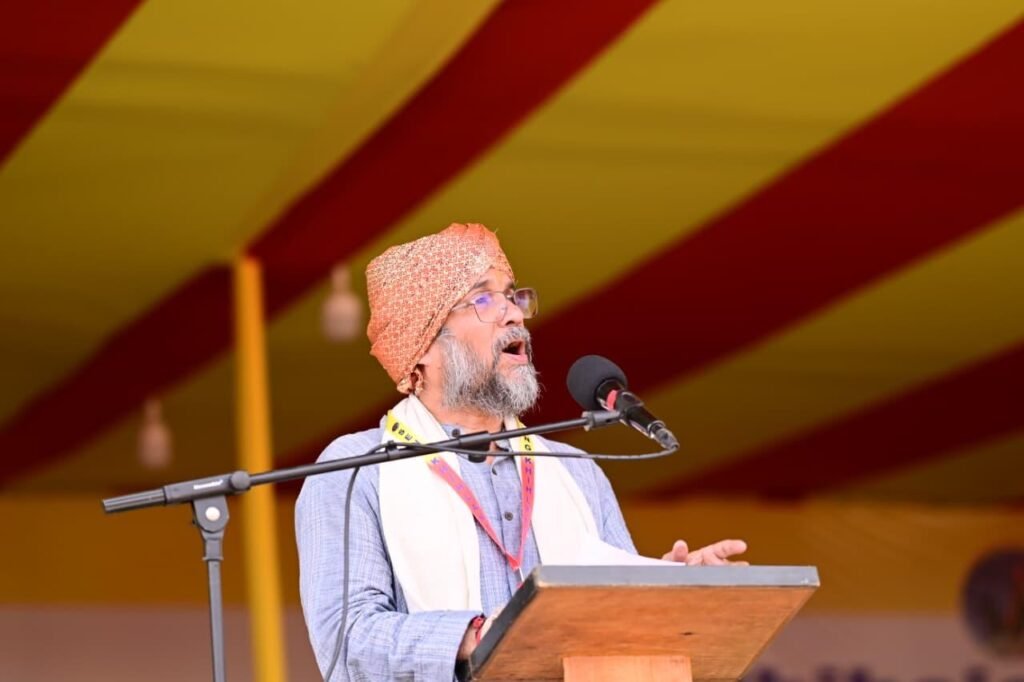
Paying tribute to struggles against colonial rule, he remembered U Tirot Sing (c. 1802–1835), U Kiang Nangbah (1836–1862), and Pa Togan Sangma (d. 1872), acknowledging their sacrifices in defending sovereignty and identity. Mohanty highlighted the richness of indigenous heritage, referring to the megalithic traditions of menhirs and dolmens as enduring symbols of an ancient civilization. He also spoke about the spiritual significance of the Nartiang Durga Temple and the Jaintia Shaktipeeth in present-day Bangladesh. He further pointed out the existence of a nearly 3,000-year-old iron-smelting tradition in Meghalaya as evidence of advanced indigenous knowledge systems.
Emphasizing the philosophical unity underlying diverse traditions, he noted that indigenous faiths across the north-eastern Bharat including those of Nyishi, Apatani, Galo, Mishings, and Kacharis share common foundations such as reverence for the Pancha Bhutas (earth, water, fire, air, and sky). Drawing from the wisdom of the Rig Veda, he cited the Vedic expression ‘Eko’ham Bahusyamah’ (I am One, may I become many), explaining that diversity is an expression of the One manifesting in multiple forms. He emphasized that in the Bharatiya worldview, diversity is not seen as division or difference as often interpreted in Western thought, but as an intrinsic expression of unity itself, where plurality strengthens, rather than fragments, the whole.
Describing indigenous faith-traditions as the mother or the foundational source of world’s modern civilisations and organised religions, he stated that just as the river Ganges depends on its origin at Gangotri, modern religions and civilizations are rooted in indigenous traditions, and their decline would impact the entire world’s cultural and spiritual balance. He also referred to the International Council for Cultural Studies (ICCS), which brings together representatives of more than 40 indigenous traditions globally, including Māori, Aboriginal, Aztec, and Zulu communities, to explore shared spiritual values and common heritage with the ethos that ‘All are One’.
In the context of the centenary year of the RSS, Mohanty emphasized the need for ‘Panch Parivartan’ like preservation of family values, environmental protection, social harmony, promotion of selfhood, and adherence to civic duties. He also highlighted the core principles of Niam Khasi such as ‘Tip briew tip blei’ (to know humanity is to know God), ‘Tip kur tip kha’, and ‘Kamai ia ka hok’ (earn righteousness), underlining that true spirituality is reflected in conduct, compassion, and selfless service.
The three-day program saw structured participation with the arrival of delegates and ceremonial Mawbynna (monolith) procession on the first day, followed by installation, awareness sessions, and prayers on the second day, and a grand concluding ceremony on the third day. More than 30 Sein Raij and Seng Khasi units participated through traditional songs and dances, reflecting the vibrant cultural heritage of the community.
The event was attended by several prominent dignitaries including Sniawbhalang Dhar, deputy chief minister of Meghalaya, Wailadmiki Shylla, State minister, Sanbor Shullai, State minister, Matthew Beyondstar Kurbah, member of State legislative assembly, Laski Rymbai, deputy chief executive member of JHADC, Sooki Lapasam and Rikut Parien, JHADC executive members along with traditional authorities like the Dollois of Shangpung, Raliang, Jowai, and Nangbah Elakas and a number of government officials. The spiritual congregation concluded with a strong message of unity, cultural pride, and the reaffirmation that preserving indigenous traditions is essential for building a harmonious, spiritually rooted, and inclusive society.