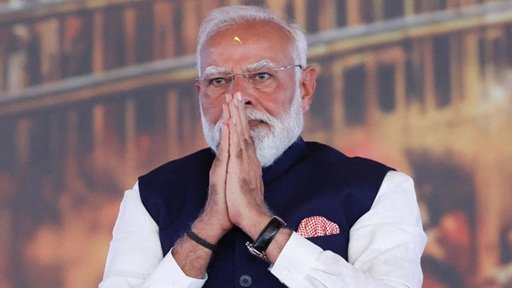
In response to a spike in global oil prices brought on by the ongoing Middle East crisis, Prime Minister Narendra Modi has urged Indians to resume working from home, purchase less gold, and restrict travel abroad.
According to Modi, the austerity measures, which are reminiscent of the Covid era, will lower gasoline use in India and help save foreign cash. Since the US and Israel’s assault on Iran, India imports 90% of its oil, and since the Strait of Hormuz, a tiny Gulf chokepoint, has been closed for more than two and a half months, the country’s crude bill has increased by billions of dollars.
Analysts described Modi’s appeal, made at a public event in the southern city of Hyderabad on Sunday, as the “most drastic” so far.
“Patriotism is not only about the willingness to sacrifice one’s life on the border. In these times, it is about living responsibly and fulfilling our duties to the nation in our daily lives,” Modi said. “In the current situation, we must place great emphasis on saving foreign exchange,” he added.
Modi advised people to carpool in order to save fuel and urged them to take public transportation like the metro. Additionally, he requested that farmers cut their fertilizer consumption in half.
The impact was evident on Indian markets on Monday. According to analysts, Modi’s remarks contributed to the benchmark Sensex index’s early-day decline of more than 1,000 points due to concerns about protracted economic disruption. Despite increasing pressure on state-run fuel dealers, India has yet to raise the price of gasoline and diesel at the pump. However, the protracted fighting and disruption of oil supply have started to put pressure on the economy as a whole.
Numerous industries have been affected, with hundreds of thousands of jobs in firms that produce tiles, glass, and plastic goods at jeopardy. Concerns regarding decreased agricultural output and increased food costs have been raised by diminishing fertilizer supply.
However, the impact has been most noticeable on the Indian rupee, which has recently fallen to all-time lows, driving up import prices and exacerbating inflation. Modi’s comments, according to analysts, suggest that the government may soon announce some guidelines to reduce energy use. Petroleum product prices may also be about to change.
India’s opposition leaders criticised Modi’s remarks, saying it pointed to poor planning on the part of the federal government.
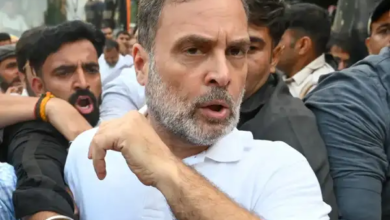
Congress party leader Rahul Gandhi said the government was shifting “responsibility onto the people” and escaping accountability themselves. “[Modi’s suggestions] aren’t sermons – these are proofs of failure,” he said in a post on X.
Economies all across the world, particularly in Asia, have been impacted by the conflict in Iran and the closure of the Strait of Hormuz, with many nations suffering from escalating fuel prices. It has been called the “largest supply disruption in history” by the International Energy Agency (IEA).
Many nations implemented policies to lessen the impact on consumers and the economy in the days after the war began. Although China ordered its oil refineries to temporarily cease exporting petroleum, the country’s petrol prices continued to rise, and some Chinese airlines reduced flights as the cost of jet fuel increased. To discourage individuals from driving, some Australian jurisdictions have reduced fares by half or made public transportation free. Following the declaration of a national emergency in March, the Philippine government reduced ferry services, provided subsidies to transport drivers, and instituted a four-day workweek for governmental personnel. Fuel rationing was also implemented in Sri Lanka, which briefly switched to a four-day workweek and closed schools, colleges, and other government buildings on Wednesdays.