
Fire That Destroyed Ancient Assyrian Library Helped Preserve Thousands of Historic Texts
News Mania Desk/ Piyal Chatterjee/ 4th June 2026

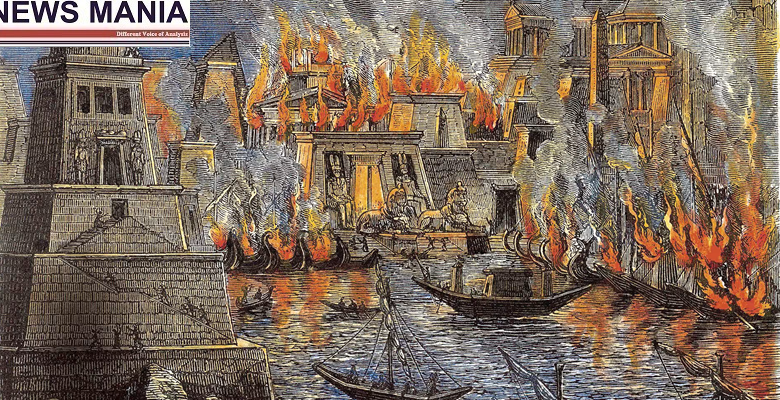
A remarkable twist of history has allowed modern scholars to access some of humanity’s oldest literary and historical records. The ancient Library of Ashurbanipal in Nineveh, destroyed during the fall of the Assyrian Empire in 612 BC, survived largely because the devastating fire that consumed it unintentionally preserved its vast collection of clay tablets.
The library was established by Ashurbanipal, the last great ruler of the Neo-Assyrian Empire. Known for his interest in learning and scholarship, Ashurbanipal assembled an extensive archive containing literary works, religious texts, legal records, scientific observations and administrative documents collected from across Mesopotamia. The collection is believed to have contained around 30,000 clay tablets inscribed with cuneiform script.
When a coalition of Babylonians and Medes invaded and destroyed the Assyrian capital of Nineveh, royal palaces and archives were engulfed in flames. While such destruction would normally have erased written records, the library’s clay tablets reacted differently. The intense heat effectively baked the tablets, hardening them into a more durable form. Buried beneath layers of rubble after the city’s collapse, the tablets remained protected from weather and decay for more than two thousand years.
The ruins of Nineveh were rediscovered by archaeologists during the nineteenth century, leading to the recovery of thousands of tablet fragments. These discoveries provided historians with invaluable insights into the culture, politics, religion and scientific knowledge of ancient Mesopotamian civilizations.
Among the most celebrated texts recovered from the library was the Epic of Gilgamesh, widely regarded as one of the oldest surviving works of literature in human history. Researchers have also uncovered records covering astronomy, medicine, mathematics and governance.