20 Years After Pluto’s Demotion, Astronomers Still Debate What Makes a Planet
News Mania Desk/ Piyal Chatterjee/ 25th August 2026

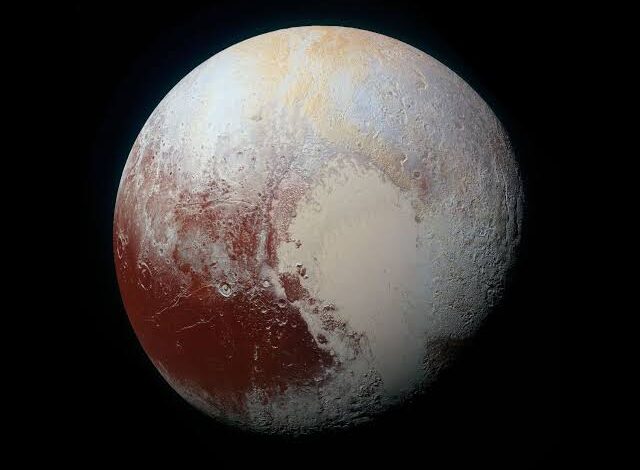
Two decades after Pluto was reclassified as a dwarf planet, astronomers are still debating one of the most basic questions in planetary science: what exactly qualifies as a planet? New discoveries beyond the Solar System have complicated the definition, exposing limitations in the criteria adopted by scientists in 2006.
Pluto lost its status as the ninth planet after the International Astronomical Union (IAU) established three conditions for a full-fledged planet. A celestial body must orbit the Sun, have enough gravity to become nearly round and clear most other objects from its orbital path. Pluto met the first two requirements but failed the third, resulting in its classification as a dwarf planet.
The discovery of Eris, an icy body located in the distant reaches of the Solar System, played an important role in the debate. Eris was found to be comparable in size to Pluto and more massive, raising questions about whether the Solar System should gain several additional planets or whether a stricter planet definition was needed.
However, the discovery of thousands of worlds orbiting stars beyond the Sun has created a new challenge. The original planetary definition was developed specifically for objects in our Solar System and does not easily accommodate the wide variety of planetary systems being observed by modern telescopes.
Astronomers have since proposed alternative ways of defining planets. A separate framework for exoplanets was developed, but questions remain over concepts such as orbital dominance. The existence of rogue planets that drift through space without orbiting a star, as well as unusual Jupiter-sized objects associated with brown dwarfs, has further complicated the classification system.
One proposal put forward by astronomer Jean-Luc Margot and colleagues seeks to measure a celestial body’s gravitational dominance more precisely. Rather than simply asking whether an object has completely cleared its orbital region, the approach attempts to determine how strongly it controls the surrounding area. Under such a system, planets such as Earth and Jupiter would remain clearly classified as planets, while objects such as Pluto and Eris would fall into another category.
The IAU did not adopt the proposal in 2024, meaning the debate continues. As astronomers discover increasingly diverse worlds, the traditional boundaries between planets, dwarf planets, moons and other celestial bodies are becoming less straightforward. Pluto’s controversial demotion, therefore, remains part of a much larger scientific discussion about how humanity defines the worlds found in space.