

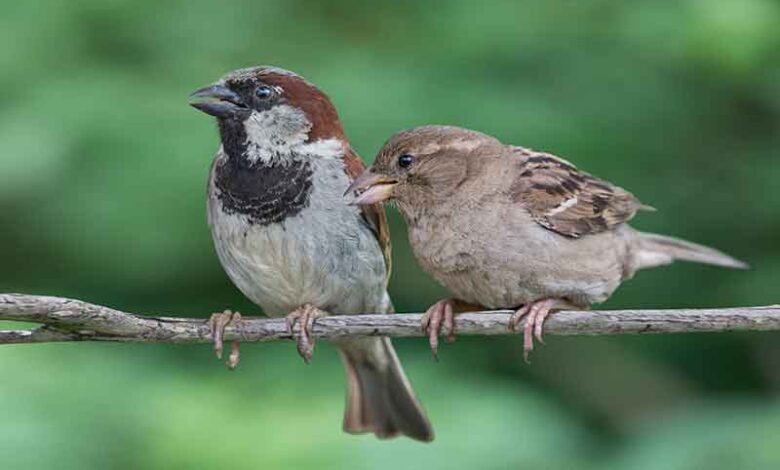
The house sparrow (Passer domesticus) is one of the most familiar birds associated with human settlements, yet its population has declined noticeably in many urban and rural areas over recent decades. Once abundant around homes, markets, farms, and gardens, sparrows are increasingly affected by rapid urbanization and changes in the environments on which they depend. Research indicates that the decline is not caused by a single factor but by the combined effects of habitat loss, reduced food availability, pesticide use, pollution, and the disappearance of suitable nesting sites.
Modern buildings often lack the small gaps, roof spaces, ventilators, and sheltered corners that traditionally provided sparrows with nesting sites. At the same time, the replacement of gardens, hedges, native vegetation, and open spaces with concrete surfaces reduces the abundance of insects and seeds. Insects are particularly important during the breeding season because young sparrows require protein-rich food. Agricultural intensification and pesticide use can therefore affect sparrows indirectly by reducing their food supply. Studies of house sparrows have identified food shortages associated with agricultural intensification as an important driver of decline in farmland populations, while the causes of urban declines can differ and may involve reduced breeding success and habitat quality.
Pollution, traffic, excessive noise, changing land-use patterns, and increasing urban temperatures may further reduce the quality of sparrow habitats. Although electromagnetic radiation from mobile-phone infrastructure is sometimes suggested as a major cause, evidence for this explanation remains inconclusive, and it should not be presented as an established primary cause. The decline of sparrows is therefore better understood as a broader consequence of ecological changes occurring in human-dominated landscapes.
Saving sparrows requires creating cities and villages that provide food, water, shelter, and safe breeding spaces. Installing appropriately designed nest boxes can compensate for the loss of nesting cavities in modern buildings. Planting native trees, shrubs, grasses, and other vegetation can increase insect populations and provide seeds and shelter. Gardens and agricultural areas should minimize unnecessary pesticide and insecticide use and adopt more wildlife-friendly practices. Clean, shallow water sources can also help birds survive periods of extreme heat and drought. Recent conservation research emphasizes that restoring both food resources and nesting opportunities is particularly important for reversing urban sparrow declines.
Conservation must also involve public participation. Residents, schools, housing societies, farmers, architects, and local governments can work together to incorporate bird-friendly features into buildings and landscapes. Citizen-science programmes and regular bird counts can help researchers monitor populations and identify areas requiring intervention. Ultimately, protecting the house sparrow is not simply about saving one familiar bird; it is about maintaining healthier and more biodiverse human environments. A landscape capable of supporting sparrows is likely to provide better habitat and ecological resources for many other species as well. Concerted action to restore nesting sites, natural food sources, vegetation, clean water, and safer urban spaces can give sparrow populations a greater opportunity to recover.