
When Patience Disappears, Personality Weakens
Ms.Bornali Biswas,Editor in Chief -2nd October 2026

What our ancestors understood about limits, discipline and the art of waiting
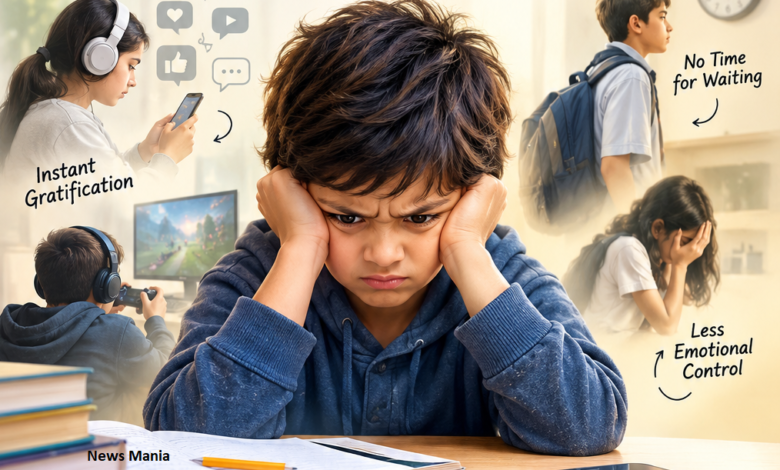
We are raising children in a world that gives them almost everything instantly—entertainment at a touch, answers within seconds and desires fulfilled with a click. Yet, strangely, patience appears to be becoming one of the rarest qualities.
The rising aggression among younger generations deserves serious reflection. It would be unfair to blame parents alone, because children are growing up amid unprecedented digital exposure, social pressures and rapidly changing lifestyles. But the home remains the first school of emotional behaviour.
Our ancestors understood something modern life often forgets: a personality is not built by getting everything one wants, but by learning how to handle what one cannot have.
Traditional Indian family life, despite its own shortcomings, often placed importance on sanyam (self-restraint), dhairya (patience), maryada (limits) and respect for elders. Children were expected to wait, listen, share, accept disappointment and understand that every desire did not require immediate fulfilment.
Today, the screen can become a convenient substitute for conversation. A child becomes restless, and a phone appears. A child becomes bored, and a video begins. A child demands something, and adults sometimes surrender simply to avoid conflict. Gradually, the ability to tolerate boredom, denial and disagreement can weaken.
We should not romanticise the past. Earlier generations could also be excessively strict, and today’s parents are often more emotionally attentive. The answer is therefore not to return to the past, but to recover its wisdom while retaining the strengths of the present.
Children need boundaries without humiliation, discipline without fear and affection without indulgence. Parents should demonstrate the behaviour they expect: if every disagreement at home ends in shouting, children learn that shouting is a solution.
Our culture offers a powerful principle: “Sanyam is strength.” Teach children to pause before reacting, listen before answering and accept that life will sometimes say “no.” Encourage outdoor play, family conversations, community participation, reading and moments without screens. Let children experience small failures and solve age-appropriate problems themselves.
Patience is not weakness. Saying “no” is not a lack of love. Allowing a child to struggle safely is not neglect.
A generation that learns to control its anger will be better prepared to control its choices, relationships and future.
Perhaps the greatest lesson our ancestors left us is simple: before trying to conquer the world, learn to conquer yourself.