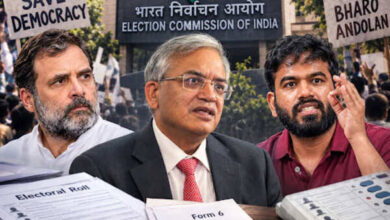
SIR ROW: Election Commission Under Fire as Opposition Escalates Protest Campaign Political confrontation intensifies over electoral-roll revision; BJP says Opposition is creating confusion and undermining public trust
Binay Gupta/ 2nd October

New Delhi:
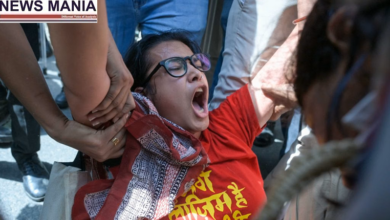
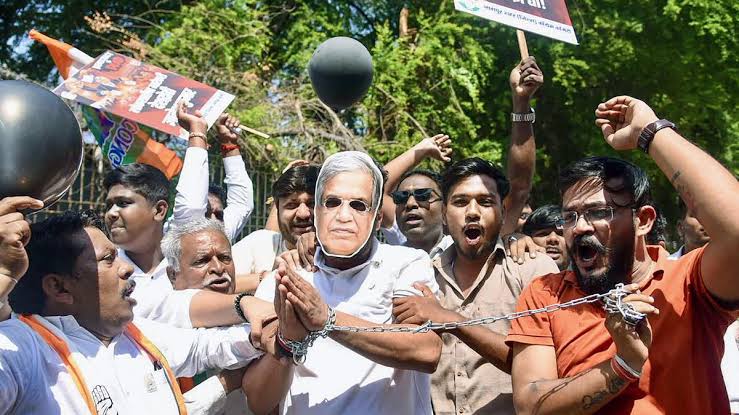
India’s political atmosphere has intensified over the Election Commission’s Special Intensive Revision (SIR) of electoral rolls, with the Congress and Left parties mounting protests against Chief Election Commissioner Gyanesh Kumar and demanding that the exercise be halted. Demonstrations were reported across several cities, including Delhi, Kolkata, Patna and Chandigarh, while the Left parties have announced a nationwide campaign from September 26 to October 2.
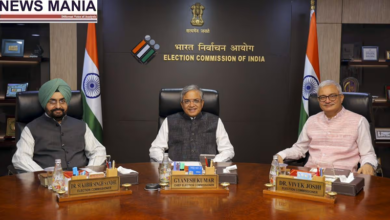
At the centre of the controversy are reports that Election Commissioners Sukhbir Singh Sandhu and Vivek Joshi recorded objections on several decisions concerning voter registration, deletion and restoration of names, and aspects of SIR. Reports have referred to 14 instances of objections over a 10-month period.
However, the political narrative surrounding these reports is sharply contested. The Election Commission has rejected the suggestion that the reported differences amount to a breakdown of the institution. It has maintained that differing views and observations are part of normal institutional deliberation and that final decisions concerning SIR were taken unanimously.
Opposition Takes the Battle to the Streets
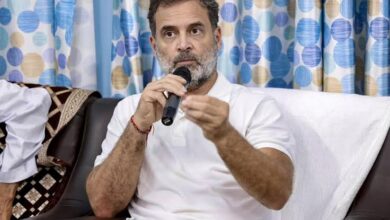
The Congress has demanded the resignation, removal and, in some instances, arrest of CEC Gyanesh Kumar. Opposition parties have also questioned the conduct of SIR and alleged that genuine voters could be excluded from electoral rolls. Five Left parties — CPI(M), CPI, CPI(ML)-Liberation, RSP and AIFB — have separately demanded the CEC’s removal, an immediate halt to SIR and restoration of voting rights for people they allege have been wrongly excluded. They have announced a week-long nationwide protest programme beginning September 26.
The protests represent a legitimate political response to concerns over electoral administration. At the same time, allegations surrounding the electoral process need to be distinguished from established facts, particularly when they involve claims of widespread wrongful deletion or institutional misconduct.
BJP’s Counter: Don’t Turn Electoral Revision into Political Unrest
The BJP has defended the Election Commission and the SIR process, arguing that electoral-roll revision is an institutional and statutory exercise rather than a political operation. BJP leaders have accused the Opposition of using the controversy to generate fear and confusion among voters.
The government’s position gains significance because the Election Commission itself continues to provide mechanisms for citizens to register, correct and track their electoral-roll applications. Its official voter-services portal provides facilities for registration, updating details, checking application status and accessing electoral-roll information. The BJP’s broader argument is that political disagreement should not automatically become a campaign questioning the legitimacy of constitutional institutions. Public confidence in elections depends not only on the conduct of the Election Commission but also on political parties presenting evidence responsibly and allowing statutory and judicial mechanisms to examine disputed claims.
A Debate That Needs Evidence, Not Escalation
The most serious issue in the present controversy is therefore not whether Opposition parties should protest — peaceful democratic protest is part of India’s political system — but whether allegations concerning voter deletion, database management and the functioning of the Election Commission are supported by verifiable evidence.
The reported differences among Election Commissioners deserve scrutiny and transparency. At the same time, the ECI’s assertion that final decisions were unanimous cannot simply be replaced by political claims of institutional capture without establishing the evidence. The dispute has also acquired a wider political dimension because Opposition parties are challenging the system governing the appointment of Election Commissioners. The 2023 law created a selection committee comprising the Prime Minister, the Leader of the Opposition in the Lok Sabha and a Union Cabinet minister nominated by the Prime Minister, replacing the interim arrangement involving the Chief Justice of India. The law itself remains a subject of legal and political debate.
The Larger Question: Protecting the Voter’s Confidence
For ordinary citizens, the immediate concern is straightforward: Will every eligible voter have a fair opportunity to remain on the electoral roll and cast a ballot?
That question should be answered through documentation, transparent procedures, grievance mechanisms, parliamentary scrutiny and judicial review — rather than through competing political narratives.
The BJP government’s position is that the Opposition should not exploit legitimate questions surrounding electoral-roll revision to create an atmosphere of distrust and unrest. The Opposition, meanwhile, maintains that stronger scrutiny is necessary to protect voting rights.
As the protest campaign begins, the responsibility lies with all political actors to ensure that disagreement does not become misinformation and that allegations do not outrun evidence. India’s electoral democracy ultimately depends on citizens having confidence that their names are correctly recorded, their votes are protected and institutional disputes are resolved through constitutional processes.
The SIR controversy, therefore, is no longer merely an argument over electoral rolls. It has become a test of whether India’s political discourse can confront difficult questions without weakening public faith in the democratic institutions themselves.