
RBI Repo Rate Hike: What a 25-Basis-Point Increase Means for Borrowers
News Mania Desk/ Piyal Chatterjee/ 8th October 2026

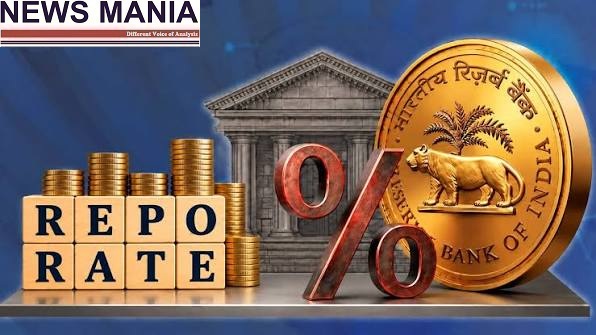
The Reserve Bank of India’s decision to raise the repo rate by 25 basis points to 5.50% is set to have a direct impact on borrowers, particularly those with loans linked to external benchmarks. The increase could make borrowing more expensive for households and businesses, although the actual impact will depend on the type of loan and the benchmark used by the lender.
The repo rate is the interest rate at which the RBI lends short-term funds to commercial banks. When the central bank raises this rate, banks can face higher funding costs, which may eventually be reflected in lending rates. Borrowers with floating-rate loans are therefore likely to be more exposed to such changes than those with fixed-rate loans.
Home-loan borrowers could see their equated monthly instalments (EMIs) rise if their loans are linked to an external benchmark such as the repo rate. Alternatively, banks may keep the EMI unchanged while extending the repayment period, depending on their lending policies and the terms of the loan agreement.
The impact will not necessarily be identical across all borrowers. Banks may have different spreads over the benchmark rate, and the extent to which the revised repo rate is passed on to customers can vary. Borrowers should therefore check their loan agreements and the benchmark applicable to their loans to understand the likely effect.
Auto-loan borrowers with floating interest rates could also face higher repayment costs. A relatively small increase in the interest rate can become significant over a longer repayment period, particularly for large loans. However, borrowers with fixed-rate loans may not experience an immediate change in their interest burden.
Small businesses and micro, small and medium enterprises (MSMEs) could also be affected if their working-capital facilities or other loans are linked to benchmark rates. Higher borrowing costs could increase the expense of financing business operations and investment. The rate hike can also influence prospective borrowers. Individuals planning to take a home loan, vehicle loan or personal loan may find that borrowing becomes slightly more expensive if lenders increase their lending rates following the RBI’s decision.
For existing borrowers, the extent of the impact will depend on factors such as the outstanding loan amount, remaining tenure, interest-rate structure and the lender’s transmission of the policy-rate change. The repo rate is an important tool used by the RBI to influence liquidity, borrowing costs and economic activity. While a rate increase can raise the cost of loans, it is also part of the central bank’s broader monetary policy approach.