“Shouldn’t Be an Instrument of Narrow Political Expediency”: India Demands Veto Power for All UN Security Council Members
News Mania Desk/ Piyal Chatterjee/ 27th October 2026

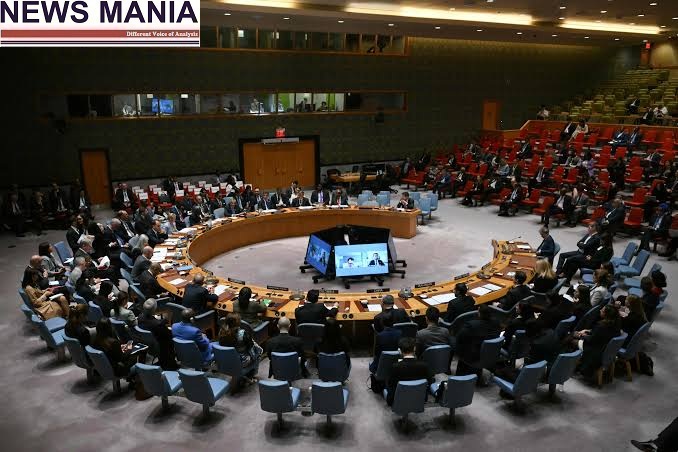
India has once again demanded extensive changes to the UN Security Council, with a focus on extending the veto power to all UNSC members.
“Limiting the veto cannot be separated from the questions of categories of membership, regional representation, size and working methods. We need to move forward on all five clusters together. India reiterates its call for a comprehensive approach towards Security Council reforms,” said India’s Permanent Representative to the UN, Parvathaneni Harish.
The diplomat added that the privilege of the veto carries an immense burden of responsibility that requires restraint.
“India has always maintained that the veto, which is right now a prerogative only of the five permanent members of the UN Security Council, is a responsibility that must be exercised with great restraint, especially on matters bearing upon the maintenance of international peace and security. It should not be an instrument of narrow political expediency,” Parvathaneni said.
The United States, the United Kingdom, France, Russia, and China presently have the veto power in the UN Security Council. Parvathaneni emphasized how the excessive use of the veto by a small number of members had “undermined the legitimacy of the Council,” citing the veto’s historical trend.
“The record of the Veto is stark. Over the life of this Organisation, the veto has been exercised 331 times on around 200 resolutions. We also note that two out of the five permanent members have not exercised a veto for over three and a half decades, and most of the vetos or threats of vetos have emanated from only three of the P5. The Veto Initiative of 2022 was seen as a harbinger of change, by mandating a UNGA debate every time a veto is cast, to fix accountability. However, the actual record of the large number of vetos cast since the UNGAR 76/262 was adopted tells a contrary story,” the envoy said.
He further stated that discussing the veto power alone is “ineffective,” and he urged text-based talks to address the reform. “Limiting the veto cannot be separated from the questions of categories of membership, regional representation, size and working methods. We need to move forward on all five clusters together. India reiterates its call for a comprehensive approach towards Security Council reforms,” he said.
India is still in line with the Common Africa Position (CAP), the envoy continued. According to the official website, CAP stands for the African Union’s unified strategy to “speak with a single voice on crucial global and continental issues.”