UK Palestine Action Ban Challenged In Supreme Court As Protests Lead To Arrests
News Mania Desk/ Piyal Chatterjee/ 5th November 2026

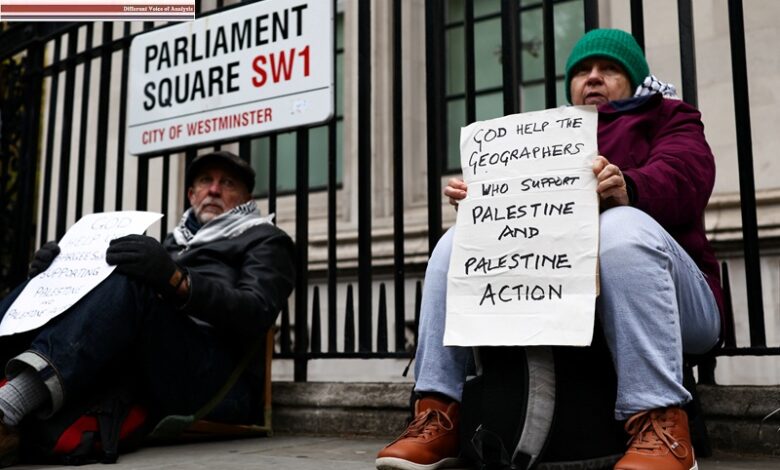
The British government’s decision to ban pro-Palestinian activist group Palestine Action has come under fresh legal scrutiny, with the organisation’s co-founder challenging the prohibition before the UK Supreme Court. The hearing began in London on Wednesday, November 4, amid protests outside the court, where several demonstrators were arrested.
Huda Ammori, who co-founded Palestine Action, has challenged the government’s decision to classify the group as a terrorist organisation under the Terrorism Act 2000. The prohibition, introduced in July 2025, followed a series of direct actions targeting companies associated with Israel’s defence industry. The ban makes membership of or support for the organisation a criminal offence under British law.
During the proceedings, Ammori’s legal team argued that the government’s decision was disproportionate and violated fundamental democratic rights, including freedom of expression and the right to peaceful assembly. Her lawyers maintained that the authorities had relied on a limited number of incidents to justify imposing a blanket prohibition on the organisation.
According to arguments presented by the challenger’s legal team, only three of the group’s 385 actions over a five-year period were assessed as meeting the legal definition of terrorism. They argued that disruptive protests and property damage should not automatically be treated as terrorism and that the government had failed to demonstrate why such an extensive restriction was necessary.
The UK Home Office, however, has defended the prohibition, maintaining that Palestine Action’s activities went beyond ordinary protest. The government cited incidents involving serious property damage, violence and the use of weapons against police officers and security personnel as justification for the ban.
The legal dispute has already passed through two levels of the British judicial system. In February 2026, the High Court ruled that the government’s decision to proscribe Palestine Action was unlawful and disproportionate. However, the Court of Appeal overturned that ruling in June, allowing the ban to remain in force.
The latest Supreme Court proceedings have drawn considerable attention from civil liberties groups and pro-Palestinian activists. Several protesters gathered outside the court as the hearing began, with police making arrests during the demonstrations. More than 4,000 people have reportedly been arrested across Britain for expressing support for the banned organisation since the prohibition came into effect.
The case has developed into a wider debate over the relationship between national security and civil liberties in Britain. Critics argue that the government’s approach risks restricting legitimate political dissent, while ministers maintain that the measures are necessary to address threats posed by extremist activities. The Supreme Court hearing is scheduled to continue over two days, November 4 and 5. Its eventual ruling could have significant implications for UK counterterrorism laws, the regulation of protest movements and the protection of democratic freedoms.