The Significant and Unique Contribution of Atal Bihari Vajpayee to Indian Democracy
Saikat Kumar Basu/ 19th August 2026

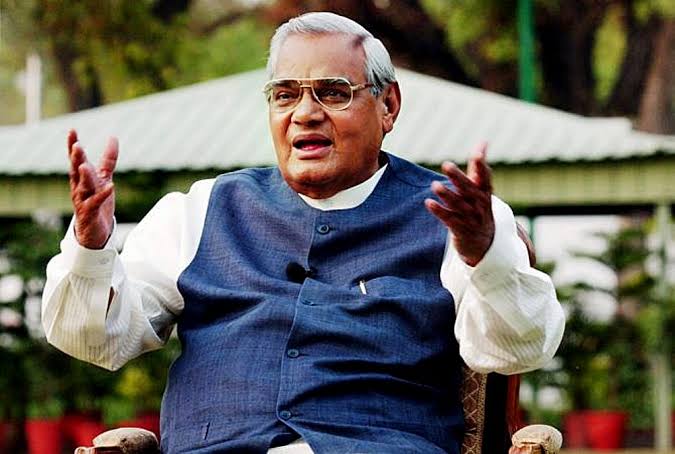
Atal Bihari Vajpayee (1924–2018) occupies a unique and distinguished place in the history of Indian democracy. A statesman, poet, parliamentarian, and visionary leader, Vajpayee made invaluable contributions to the strengthening of democratic institutions, the promotion of political pluralism, and the advancement of India’s socio-economic development. His political career, spanning more than five decades, reflected a deep commitment to democratic values, national unity, and inclusive governance. As the tenth Prime Minister of India, Vajpayee’s leadership left an enduring imprint on the country’s democratic framework.
Early Political Career and Parliamentary Excellence
Atal Bihari Vajpayee entered politics at a young age and became one of India’s most respected parliamentarians. He was elected to the Lok Sabha for the first time in 1957 and subsequently served in both the Lok Sabha and the Rajya Sabha. His eloquence, intellectual depth, and ability to engage in constructive debates earned him admiration across party lines.
Vajpayee firmly believed that democracy flourishes through dialogue, mutual respect, and consensus-building. Even his political opponents acknowledged his parliamentary skills and statesmanship. His speeches in Parliament, marked by wit, logic, and patriotism, enriched the democratic culture of India.
Champion of Coalition Politics
One of Vajpayee’s most significant contributions to Indian democracy was his successful management of coalition politics. During the late twentieth century, India’s political landscape underwent a transformation from single-party dominance to coalition governments. Vajpayee played a crucial role in proving that coalition governments could provide stable and effective administration.
As the leader of the National Democratic Alliance (NDA), Vajpayee brought together parties with diverse ideological backgrounds and regional interests. His inclusive leadership style, willingness to compromise, and emphasis on consensus ensured the survival and success of the coalition government from 1999 to 2004.
His ability to accommodate differing viewpoints strengthened federalism and demonstrated that democratic governance thrives on cooperation and dialogue rather than confrontation.
Strengthening Democratic Institutions
Vajpayee consistently upheld the independence and dignity of democratic institutions, including Parliament, the judiciary, the media, and the Election Commission. He believed that strong institutions form the backbone of democracy.
As Prime Minister, he encouraged parliamentary debates and respected the opposition’s role in governance. His government promoted transparency and accountability, thereby reinforcing public confidence in democratic processes.
His commitment to democratic principles was evident in his famous statement that governments may come and go, political parties may rise and fall, but the nation and democracy must endure.
Promotion of National Unity and Secularism
Atal Bihari Vajpayee emphasized national integration and social harmony. He believed that India’s strength lies in its cultural diversity and pluralistic traditions. His vision of governance sought to unite people irrespective of religion, language, caste, or region.
Vajpayee advocated the principle of “Raj Dharma,” emphasizing that rulers must govern impartially and uphold justice for all citizens. His moderate and inclusive approach helped strengthen the secular fabric of Indian democracy.
Economic Reforms and Infrastructure Development
Vajpayee’s tenure witnessed major economic reforms that transformed India’s developmental trajectory. He initiated policies that promoted economic liberalization, private investment, and technological advancement.
Among his most important achievements were:
The Golden Quadrilateral Project: This ambitious highway network connected Delhi, Mumbai, Chennai, and Kolkata, revolutionizing transportation and boosting economic growth.
Pradhan Mantri Gram Sadak Yojana: The scheme improved rural connectivity by linking remote villages with all-weather roads, promoting rural development and social inclusion.
Telecommunications Revolution: Vajpayee’s government liberalized the telecommunications sector, paving the way for the expansion of mobile and internet services across India.
Disinvestment and Economic Modernization: His policies encouraged economic efficiency and strengthened India’s position in the global economy.
These initiatives contributed significantly to inclusive development and enhanced the quality of life of millions of Indians.
Foreign Policy and National Security
Vajpayee’s contribution to Indian democracy extended beyond domestic politics to the realm of foreign policy and national security. In 1998, India conducted the Pokhran-II nuclear tests under his leadership, establishing itself as a nuclear power while maintaining a commitment to peace and responsible diplomacy.
Despite strategic challenges, Vajpayee actively pursued peace initiatives with neighboring countries. His historic bus journey to Lahore in 1999 symbolized his belief in dialogue and peaceful coexistence. Even during periods of conflict, he emphasized diplomacy and reconciliation.
His balanced approach to national security and international relations enhanced India’s global standing while remaining firmly rooted in democratic values.
Respect for Freedom of Expression
As a poet and writer, Vajpayee deeply appreciated the importance of freedom of thought and expression. He valued intellectual diversity and encouraged open discussion on national issues. His speeches and literary works reflected sensitivity, compassion, and a profound understanding of human values.
His respect for dissent and criticism strengthened the democratic ethos of India and encouraged healthy political discourse.
A Politics of Consensus and Civility
Perhaps Vajpayee’s most unique contribution to Indian democracy was his politics of civility and consensus. At a time when political polarization was increasing, he demonstrated that ideological differences need not lead to hostility.
He maintained cordial relations with leaders across the political spectrum and consistently emphasized dialogue over confrontation. His leadership style embodied tolerance, moderation, and democratic ethics.
Legacy and Conclusion
Atal Bihari Vajpayee’s legacy remains deeply embedded in the democratic history of India. He strengthened parliamentary traditions, nurtured coalition politics, promoted economic modernization, and upheld democratic institutions. His commitment to inclusiveness, national unity, and consensus-building distinguished him as one of India’s greatest democratic leaders.
Vajpayee demonstrated that democracy is not merely a system of government but a culture of dialogue, respect, and shared responsibility. His life and work continue to inspire generations of Indians to uphold the ideals of democracy, justice, and national service.
In the annals of Indian history, Atal Bihari Vajpayee will always be remembered as a statesman whose vision, integrity, and humanity enriched and strengthened the foundations of Indian democracy.