NASA Study Finds Human-Associated Microbes Could Survive on Moon’s South Pole
News Mania Desk/ Piyal Chatterjee/ 21st August 2026

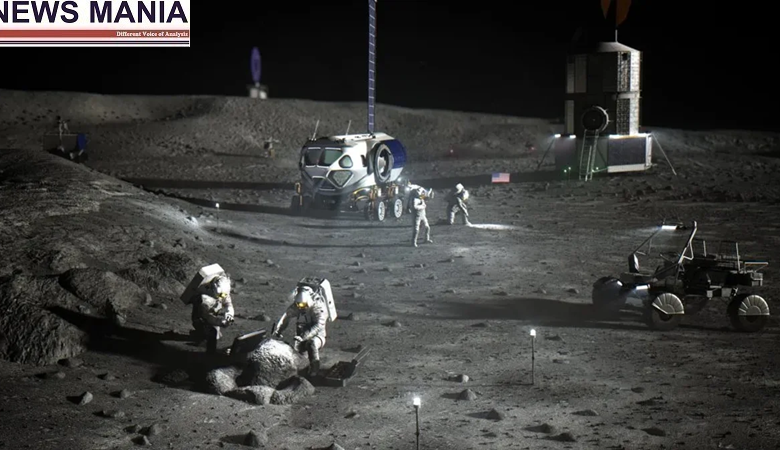
Microorganisms commonly associated with humans may be capable of surviving in some of the Moon’s harshest environments, including permanently shadowed regions near its south pole, according to new research highlighted by NASA. The findings could have important implications for future human missions and efforts to prevent biological contamination of the lunar surface.
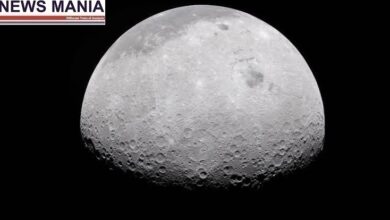
The Moon is widely regarded as an extremely hostile environment for terrestrial life, with no atmosphere comparable to Earth’s, intense radiation and dramatic temperature variations. However, scientists have found that certain microbes are remarkably resilient and may be able to endure conditions that would be fatal to most living organisms.
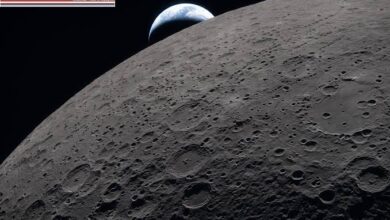
Researchers examined whether microorganisms linked to humans could remain viable under conditions resembling those found in permanently shadowed lunar regions. These areas receive little or no direct sunlight and are among the coldest locations in the solar system. The results suggest that some microbes could potentially persist there, particularly when shielded from the harshest environmental conditions.
The study is significant because the lunar south pole has become a major focus of upcoming exploration. NASA and other space agencies are preparing increasingly sophisticated missions to the region, which is believed to contain deposits of water ice inside permanently shadowed craters. These resources could eventually support longer-duration human operations on the Moon.
As astronauts and spacecraft arrive, they could unintentionally transport microorganisms from Earth. The possibility that some of these organisms could survive after reaching protected lunar environments raises questions about how future missions should manage biological contamination.
The issue falls under the broader field of planetary protection, which seeks to prevent spacecraft and human activity from compromising scientific investigations of other worlds. Protecting extraterrestrial environments from Earth organisms is particularly important when scientists are searching for evidence of past or present life.
NASA stressed that the findings do not indicate that the Moon contains native life. Instead, the research demonstrates that organisms originating on Earth may have a greater capacity for survival in certain lunar environments than previously assumed. The results could therefore help scientists and mission planners improve contamination-control procedures before sustained human activity begins around the lunar south pole. As lunar exploration moves towards longer and more frequent missions, understanding how terrestrial microbes behave beyond Earth will become increasingly important.