
India’s per capita carbon emissions, according to PM Modi, are less than half of the global average.
News Mania Desks/ Piyal Chatterjee/ 19th September 2026

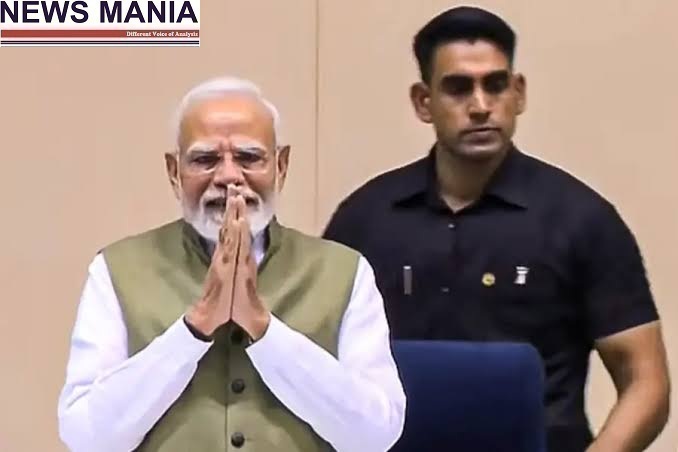
India’s per capita carbon emissions are less than half of the world average, according to Prime Minister Narendra Modi. Mr. Modi stated that poor nations have frequently been unfairly held accountable for carbon emissions during the opening of the International Conference on the Future of Environment and Climate Dynamics in New Delhi today. He emphasized that India is the only G-20 nation that has successfully and ahead of schedule met the obligations set at the COP-21 Summit in Paris. According to the Prime Minister, India has achieved remarkable advancements in all environmental domains throughout the last twelve years.
Through programs like the International Solar Alliance, Global Biofuels Alliance, International Big Cat Alliance, and Mission LiFE, Prime Minister Modi stated, India is collaborating with the rest of the world and establishing new benchmarks for environmental protection. According to Mr. Modi, India has made remarkable strides in all environmental fields during the last twelve years. According to the prime minister, India has made a substantial contribution to environmental conservation and has placed a strong emphasis on renewable energy.
According to Prime Minister Modi, India is currently working quickly in fields like green hydrogen and clean mobility. He emphasized that India’s wind energy capacity has increased thrice. Mr. Modi stressed that the development of nuclear energy is another priority for the new India.
Surya Kant, Chief Justice of India, stated on the occasion that the concept of protecting the environment was present in the nation long before environmental tribunals, legal systems, and compliance frameworks were established. He emphasized the significance of each citizen’s basic responsibility to preserve and enhance the natural environment, which includes woods, lakes, rivers, and wildlife, as well as to have empathy for all living things. According to the Chief Justice, India’s Constitution represents a moral pledge to the country’s past, present, and future generations as well as a political document.
Environment Minister Bhupender Yadav emphasized India’s deep-rooted environmental ethos, viewing the Earth as a shared heritage. Non-fossil fuel sources now exceed 54% of installed electricity capacity, positioning India as third globally in renewable energy and second in solar growth. He noted that economic growth and climate action can coexist.
On wildlife conservation, efforts extend beyond individual species to maintaining ecological balance, with key species like tigers, lions, and elephants seeing population increases. Initiatives for vulture and Great Indian Bustard conservation, as well as forest, grassland, and wetland restoration, were also highlighted.
The two-day conference organized by the National Green Tribunal gathers environmental experts and judges from the Supreme Court, High Courts, and District Courts, along with judicial representatives from 17 countries. It aims to facilitate the exchange of judicial approaches, scientific knowledge, and governance practices while addressing crucial environmental and climate challenges, including policy gaps and ways to enhance environmental governance and institutional collaboration.