Iran–UAE Tensions Escalate: Why Abu Dhabi Has Become the Hardest Hit Target in the Persian Gulf Conflict
News Mania Desk/ Piyal Chatterjee/5th May 2026

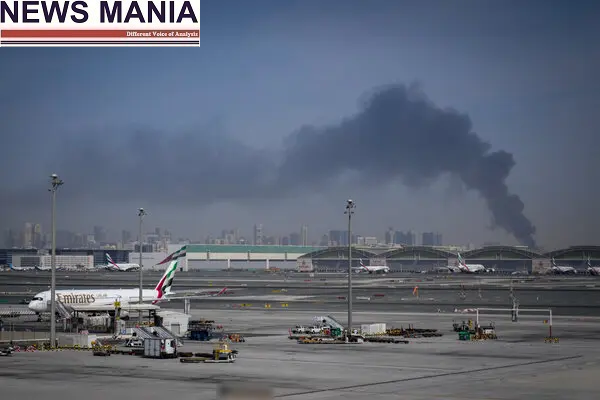
The ongoing US-Iran conflict has increasingly drawn the United Arab Emirates (UAE) into the centre of regional tensions, with recent analysis suggesting that Abu Dhabi has emerged as the most affected state in the Persian Gulf theatre. Iran’s intensified strikes on UAE-linked infrastructure highlight a broader strategic shift in the conflict, where economic, geopolitical, and military considerations are converging.
According to report, Iran’s attacks on the UAE are driven not only by military retaliation but also by the country’s strategic importance in the Gulf. The UAE serves as a major global logistics hub, a financial centre, and a critical energy export node, making it highly vulnerable to disruption. Its ports, oil facilities, and shipping routes are tightly integrated into international supply chains, meaning any attack has immediate global repercussions.
One of the key incidents cited is the drone and missile strikes on oil infrastructure in Fujairah, which caused fires and injuries, including to foreign nationals. These attacks underline Iran’s ability to target high-value economic assets outside traditional military zones. The UAE’s proximity to the Strait of Hormuz, a vital maritime chokepoint through which a significant portion of global oil flows, further increases its exposure.
UAE has a deepening strategic alignment with the United States and Israel, which has further complicated its security position. As Abu Dhabi strengthens defence cooperation with Western allies and expands its economic partnerships, Iran views the UAE as part of a broader regional bloc aligned against its interests. This perception has contributed to Iran’s willingness to escalate pressure on Emirati territory and assets.
At the same time, the UAE’s role as a global investment hub has amplified the impact of the conflict. Disruptions to shipping routes, oil facilities, and financial markets have not only affected domestic stability but also triggered concerns across international markets dependent on Gulf energy exports. Analysts note that even limited strikes in the UAE can have disproportionate effects on global oil prices and trade flows.
Its economic centrality, geopolitical alignment with the US and Israel, and geographic position near key maritime routes collectively make it a primary focal point of Iranian military pressure. As tensions continue, the UAE’s security challenges are expected to intensify further, with wider implications for regional stability and global energy markets.