NASA Launches ‘Your Name in Landsat’ Tool, Turns Text into Earth-Themed Satellite Images
News Mania Desk/ Piyal Chatterjee/28th April 2026

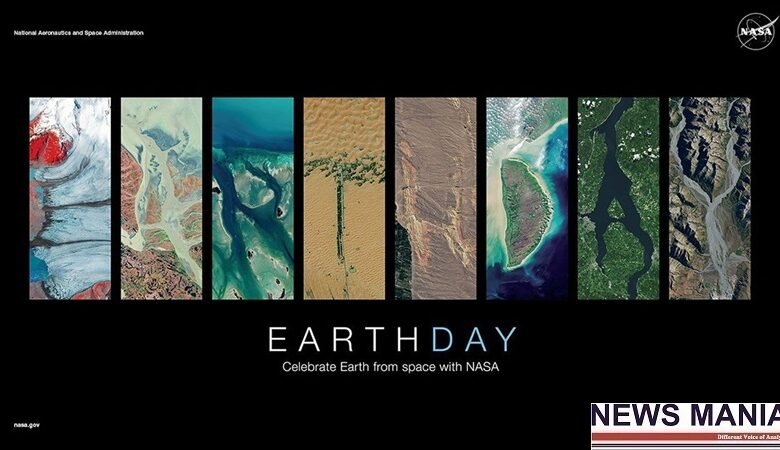
NASA has unveiled an interactive feature that allows users to convert their names into visually compelling images created from real satellite data of Earth. The tool, titled Your Name in Landsat, blends science with creativity, offering a novel way for the public to engage with Earth observation technology.
The feature draws on imagery from the Landsat program, a joint initiative between NASA and the U.S. Geological Survey that has been documenting Earth’s surface for over five decades. By entering a name or word, users can generate a customized visual where each letter is represented by satellite images of natural landscapes that resemble alphabetic shapes.
These letter-like formations are sourced from a vast archive of satellite data, capturing geographical features such as winding rivers, rugged coastlines, expansive deserts, and mountain ranges. Each image is carefully selected to mimic the contours of specific letters, resulting in a striking combination of typography and real-world geography.
Beyond its visual appeal, the tool also serves an educational purpose. Users can explore additional details about each image, including its location and the environmental context behind it. This provides insight into the diversity of Earth’s terrain while highlighting the scientific value of satellite monitoring.
The initiative was introduced around Earth Day as part of NASA’s broader efforts to raise awareness about environmental conservation and the role of satellite technology in studying the planet. The Landsat program, in particular, has been instrumental in tracking long-term changes such as deforestation, urban expansion, and the effects of climate change.
Officials say the tool is designed to make complex scientific data more accessible and engaging for a wider audience. By transforming satellite imagery into a personalised experience, NASA aims to spark curiosity and encourage people to explore Earth science in an interactive way.