PM Modi Inaugurates 594-km Ganga Expressway, Boosting Connectivity Across Uttar Pradesh
News Mania Desk/ Piyal Chatterjee/ 29th April 2026

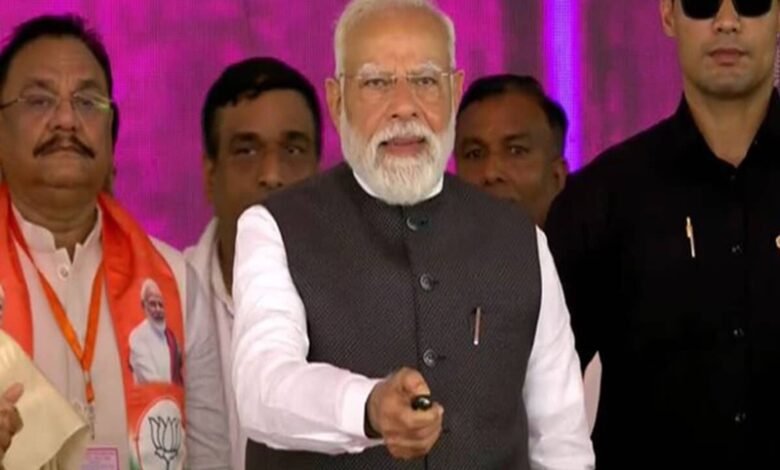
Prime Minister Narendra Modi on Wednesday inaugurated the ambitious Ganga Expressway, a 594-kilometre-long infrastructure project aimed at significantly enhancing connectivity and economic growth across Uttar Pradesh. The inauguration ceremony took place in Hardoi district, marking a major milestone in the state’s expanding road network.
The newly opened expressway connects the western city of Meerut with the eastern hub of Prayagraj, making it the longest expressway in the state. Designed as a six-lane, access-controlled greenfield corridor, the project has been built with provisions for future expansion to eight lanes, ensuring its capacity to handle increasing traffic demand in the years ahead.
Constructed at an estimated cost exceeding ₹36,000 crore, the expressway is expected to drastically cut travel time between Meerut and Prayagraj from nearly 10–12 hours to about six hours. This reduction is likely to improve not only passenger travel but also the efficiency of goods transportation, benefiting trade and logistics across multiple regions.
Passing through 12 districts of Uttar Pradesh, the expressway is poised to serve as a vital economic corridor. It will connect remote and semi-urban areas to major cities, facilitating better market access, industrial development, and employment generation. Officials believe the project will stimulate investment and create new opportunities in sectors such as manufacturing, agriculture, and services.
A notable feature of the Ganga Expressway is a 3.5-kilometre-long emergency airstrip located in Shahjahanpur district. This facility is designed to support aircraft landings during emergencies or defence operations, adding strategic importance to the project. Additionally, the expressway will be equipped with modern infrastructure, including rest areas, trauma centres, and electric vehicle charging stations, ensuring safety and convenience for commuters.
Speaking at the event, Modi described the expressway as a transformative project that would act as a “lifeline” for Uttar Pradesh’s development. He highlighted the government’s focus on building world-class infrastructure to drive economic progress and improve the quality of life for citizens.
The Ganga Expressway is part of a broader push to modernise India’s transport infrastructure and strengthen regional connectivity. With its scale, advanced features, and economic potential, the project is expected to play a crucial role in reshaping the growth trajectory of Uttar Pradesh while reinforcing its position as a key driver of the country’s economy.
Over the past few years, the Supreme Court has rejected a number of petitions pointing to hate speech incidents, noting that the current criminal code sufficiently addresses these offenses. The court noted that the idea that hate speech is not protected by the law is false. The highest court emphasized that there is no legislative vacuum in this area and that people can seek legal remedies by closing contempt cases against state officials for their inactivity against hate speech.
It further stated that the creation of an offense is still solely the responsibility of the legislative and is not within the purview of the judiciary. The Supreme Court has been at the center of a challenging issue for years: how far may the judiciary go in combating hate speech?
The court has been urged to intervene on multiple occasions, from the initial wave of petitions during the pandemic that highlighted derogatory terms like “corona jihad,” to challenges against the contentious “UPSC jihad” broadcast by Sudarshan TV, and later pleas coming from remarks at Dharam Sansad meetings.
At times, it has taken decisive action, even stopping the broadcast of controversial shows in 2020. Later, in 2023, it ordered police in all States and Union Territories to file formal complaints (FIRs) on their own in situations of hate speech against communities. However, its most recent position indicates a change in tone.
Using the separation of powers concept, the court dismissed a number of long-pending petitions, highlighting the constitutional bounds of judicial action.
With the passage of the Bharatiya Nyaya Sanhita (BNS) and Bharatiya Nagarik Suraksha Sanhita (BNSS), two new criminal law frameworks, the bench pointed out that there is no longer a “vacuum” in the law regarding hate speech.
The court acknowledged that hate speech is still “detrimental to fraternity,” but it declined to provide new guidelines, letting legislators choose if a more complex legal framework is required. It stated that petitioners are free to seek remedies under current legislation or contact the relevant authorities.
The Supreme Court’s involvement in hate speech cases has evolved significantly over six years. It began with a notable intervention in 2020, addressing harmful narratives such as “corona jihad” and “UPSC Jihad,” initiated due to violation of fundamental rights. As the hate speech docket expanded in 2021-22 amid rising incidents at religious gatherings, the court demanded proactive registration of FIRs from states to curb communal hatred. A decisive order in April 2023 mandated that all states register complaints without waiting for public reports, emphasizing the protection of the secular nature of the nation.
However, by late 2024-2025, the court showed hesitation in its expansive role, asserting institutional limits and returning to statutory remedies and executive accountability. On January 20, 2026, the court dismissed pending petitions on hate speech, closing a significant chapter while allowing parties to seek other legal remedies, retaining only one case relating to an alleged hate crime.