Youth Wave Reshapes Nepal Politics as Balen Shah Emerges as Leading Force
News Mania Desk / Piyal Chatterjee/ 7th March 2026
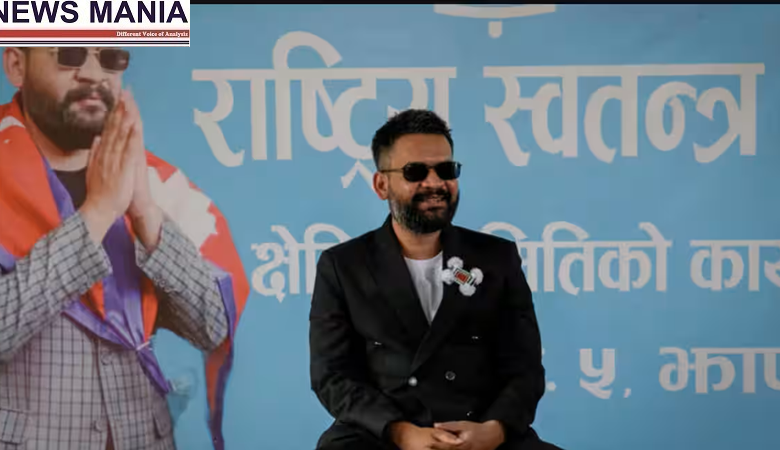
Nepal’s political landscape is witnessing a dramatic shift as a new generation of voters backs reformist leaders, with Balendra Shah emerging as the central figure of this transformation. Early results from the country’s latest parliamentary elections indicate strong gains for the Rastriya Swatantra Party, signalling widespread dissatisfaction with Nepal’s long-established political leadership.
Shah, 35, who rose to prominence as the mayor of Kathmandu, has become a symbol of the country’s growing youth-driven political movement. Known for his unconventional background as a former rapper and outspoken public figure, he built a strong following by criticising corruption, bureaucratic inefficiency and the dominance of traditional parties in Nepal’s political system.
Preliminary vote counts suggest that the Rastriya Swatantra Party has performed strongly in several constituencies under Nepal’s first-past-the-post electoral system. The party is either leading or winning in numerous seats, putting it in a powerful position in the new parliament and challenging the dominance of parties that have shaped Nepal’s politics for decades.
The election marks the first major national vote since political turmoil in 2025 that significantly altered the country’s political climate. Public frustration had intensified after months of protests and political instability, eventually forcing the resignation of former prime minister K. P. Sharma Oli. The demonstrations, largely driven by young people, reflected anger over unemployment, corruption and what many viewed as ineffective governance.
Traditional political forces such as the Nepali Congress and the Communist Party of Nepal (UML) appear to be losing ground as voters increasingly turn to newer political groups promising reform. Analysts say the surge in support for Shah’s party reflects a growing demand for transparency, accountability and a fresh approach to governance.
Shah’s campaign has particularly resonated with younger voters who see him as an outsider capable of challenging entrenched political interests. His extensive use of social media and direct engagement with citizens have helped him connect with voters who feel alienated from traditional political structures.
Observers note that if current trends continue, the Rastriya Swatantra Party could play a decisive role in forming the next government. Such an outcome would represent one of the most significant political shifts in Nepal in recent years and could potentially pave the way for Shah to become the country’s youngest prime minister. However, analysts caution that electoral success will bring major responsibilities. Transforming campaign promises into effective policies, addressing economic challenges and maintaining political stability will test the capabilities of the new leadership.