Smithsonian Institution’s National Museum of Asian Art Announces Landmark Exhibition on India’s Himalayan Paintings
News Mania Desk/ 30th April 2026

Washington, D.C. | April 29, 2026:
The National Museum of Asian Art, part of the Smithsonian Institution, has announced a major new exhibition titled “Of the Hills: Pahari Paintings from India’s Himalayan Kingdoms,” scheduled to run from April 18, 2026 to July 26, 2026.
The exhibition will showcase 48 rare paintings and coloured drawings from India’s Himalayan regions, including several works that have never been publicly displayed before, drawn largely from the renowned Benkaim Collection.
Celebrating India’s Himalayan Artistic Heritage
The exhibition focuses on the rich tradition of Pahari paintings, created between the 17th and 19th centuries across small Hindu kingdoms located in the Himalayan foothills of northern India. These artworks are known for their intricate detailing, delicate shading, and vivid storytelling, often depicting scenes from Hindu epics such as the Bhagavata Purana and the Ramayana.
Curators note that the works reflect a unique blend of local cultural expression and wider transregional artistic influences, demonstrating the sophistication of courtly art in the Himalayan region.
Artistic Innovation Across Centuries
According to Debra Diamond, Elizabeth Moynihan Curator for South and Southeast Asian Art at the museum, the paintings are both visually striking and historically significant:
“These paintings are swoon-worthy… created with opaque watercolors made from ground pigments, beetle wings, and gold.”
She added that despite their popularity among art lovers, Pahari paintings remain “among the least well understood” traditions in Indian art history.
The exhibition explores artistic evolution from 1620 to 1830, highlighting collaboration between artists, patrons, and regional schools that shaped the visual language of the Himalayas.
Rare Works from the Benkaim Collection
A significant portion of the exhibition comes from the Ralph and Catherine Benkaim Collection, acquired by the museum in 2017–2018. Some of these pieces will be displayed publicly for the first time.
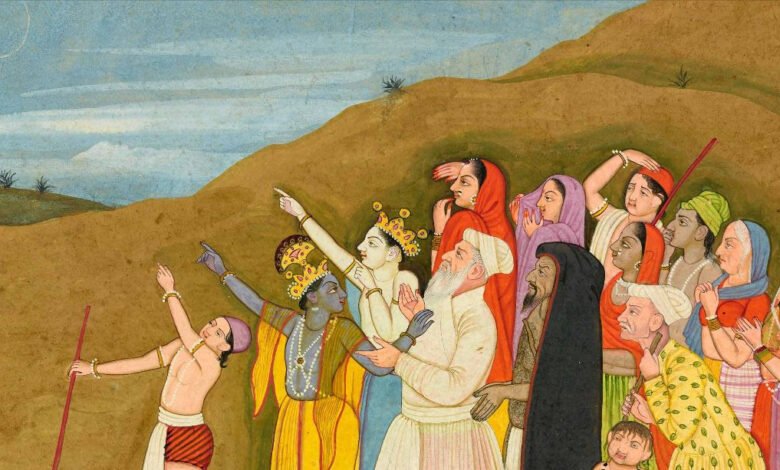
One featured artwork includes a depiction of Krishna and his family observing a solar eclipse, attributed to a late 18th-century Pahari artist from Himachal Pradesh, India.
Global Cultural Collaboration
The exhibition is part of a wider international showcase of Pahari art, running alongside similar displays at the Cleveland Museum of Art and the Cincinnati Art Museum. Curators across institutions collaborated with scholars and collectors to produce a comprehensive catalogue on Himalayan painting traditions.
Deepening Understanding of South Asian Art
Museum director Chase F. Robinson noted that the exhibition aims to broaden global understanding of Indian artistic heritage:
“These works allow us to deepen our understanding of Indian culture and open new avenues of scholarship.”
Conclusion
“Of the Hills” positions Himalayan Pahari paintings as a vital chapter in global art history—highlighting not only their aesthetic brilliance but also their cultural and spiritual depth. The exhibition is expected to attract international attention from scholars, historians, and art enthusiasts alike.