
Supreme Court Issues Notice on Pleas Challenging Transgender Law Amendments
News Mania Desks/ Piyal Chatterjee/ 4th May 2026

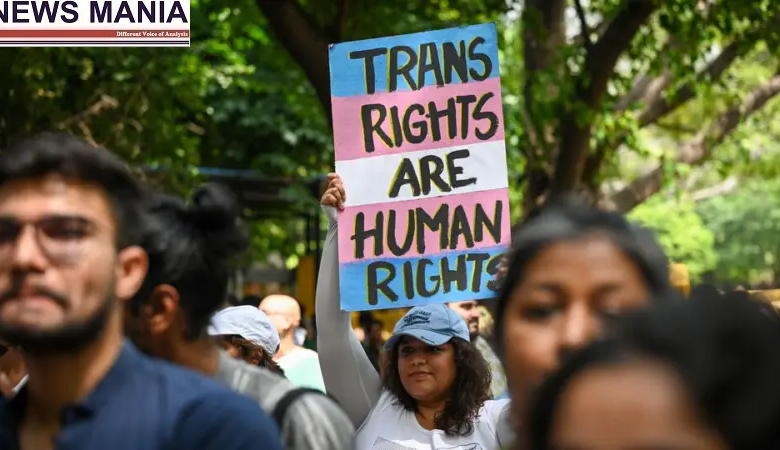
The Supreme Court of India has sought the Centre’s response on a batch of petitions questioning the constitutional validity of recent amendments to the Transgender Persons (Protection of Rights) Act, 2019, with particular focus on provisions that allegedly dilute the right to self-perceived gender identity.
The petitions challenge the Transgender Persons (Protection of Rights) Amendment Act, 2026, arguing that it marks a departure from the principles laid down in the landmark National Legal Services Authority v. Union of India (NALSA) judgment. In that ruling, the apex court had recognised the right of individuals to identify their gender based on self-perception, without requiring medical or bureaucratic validation. Petitioners now contend that the amended law undermines this foundational principle.
One of the central issues raised is the introduction of a more stringent certification process for legal recognition of gender identity. Under the amended framework, individuals are required to obtain a certificate of identity issued by a District Magistrate, based on recommendations from a medical board. According to the petitioners, this effectively reintroduces medical scrutiny and external verification, which had previously been rejected by the court as violative of dignity and autonomy.
The pleas argue that such provisions infringe upon fundamental rights guaranteed under Article 21 of the Constitution, including the right to privacy, personal liberty, and dignity. By making recognition contingent on medical evaluation, the amended law is said to impose barriers that could marginalise members of the transgender community rather than protect them.
Another contentious aspect of the amendment relates to individuals who undergo gender-affirming procedures. The revised law makes it mandatory for such persons to apply for a fresh certificate reflecting their gender identity. Petitioners argue that this converts what was earlier a voluntary process into a compulsory requirement, thereby interfering with personal choice and bodily autonomy. They maintain that gender identity should not be subject to repeated verification by state authorities.
Concerns have also been raised regarding the revised definition of a “transgender person” under the amendment. Critics claim that the new wording narrows the scope of recognition by tying identity to specific socio-cultural or medical categories. This, they argue, risks excluding individuals who do not conform to these classifications, potentially depriving them of legal recognition and access to welfare measures.
The court, while issuing notice, acknowledged the importance of the issues raised and tagged the matter with similar pending petitions. The Centre has been asked to file its response, after which the case will be taken up for detailed hearing.
The outcome of the case is expected to have far-reaching implications for transgender rights in India. At stake is not only the interpretation of the amended law but also the broader question of whether the state can impose conditions on an individual’s right to self-identify their gender.
As the legal battle unfolds, the proceedings are likely to revisit key constitutional principles established in the NALSA judgment, potentially shaping the future framework of rights, recognition, and protections for the transgender community in the country.