
When Every Ride Hurts: Kolkata’s App-Cab Crisis Needs Urgent Reform
Ms.Bornali Biswas ,Editor in Chief/ 2nd August 2026

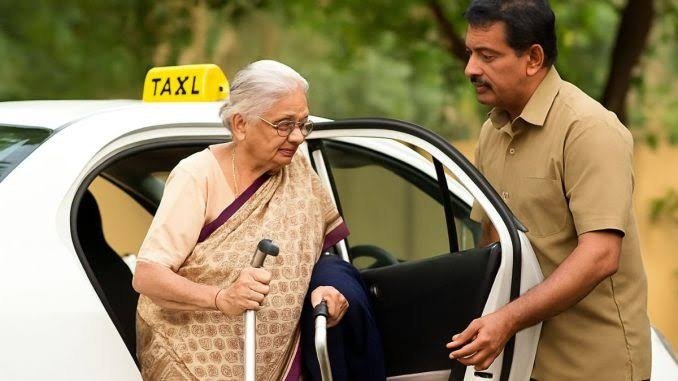
For millions of Kolkatans, app-based cabs are no longer a luxury—they are a necessity. Office-goers, students, senior citizens, women travelling late at night, patients rushing to hospitals, and families commuting across the city depend on these services every day. Yet, what should be a convenient mode of transport is rapidly becoming an expensive burden.
Compared to many other Indian cities, app-cab fares in Kolkata often appear disproportionately high. During peak hours, rain, festivals, or periods of high demand, commuters are frequently forced to pay double—or even more—than the normal fare. While cab operators cite rising fuel prices, vehicle replacement costs, maintenance expenses, and platform commissions, the common citizen cannot be expected to bear the entire financial burden.
The recent 12-hour app-cab strike exposed just how vulnerable Kolkata’s transport ecosystem has become. Thousands of commuters were stranded at airports, railway stations, and business districts, while many were forced to pay exorbitant rates to reach their destinations. Such disruptions hurt ordinary people far more than they pressure policymakers.
The concerns raised by drivers deserve attention. Better earnings, fair commission structures, and improved working conditions are legitimate issues. However, increasing fares further is not the solution. Kolkata remains a city where a large section of the population belongs to the middle and lower-income groups. Salaries have not risen at the same pace as transport costs. Every additional rupee spent on commuting reduces what families can spend on food, education, healthcare, and other essentials.
The need of the hour is a balanced approach. The West Bengal Government should strengthen fare regulation, ensure transparency in surge pricing, and prevent arbitrary fare multiplication by app-based platforms. Aggregators, too, must revisit their commission policies instead of allowing the burden to fall solely on passengers. At the same time, expanding affordable alternatives such as Yatri Sathi, improving taxi availability, and strengthening public transport can reduce dependence on costly app-based rides.
Public transport is a public service, not merely a business opportunity. A city cannot progress if its people struggle to afford basic mobility. The objective should be to protect commuters while ensuring that drivers receive a fair livelihood through better policy reforms—not by making the common passenger pay more.
Affordable transportation is not a privilege; it is an essential part of an inclusive and equitable city.vocate a “human-in-the-loop” approach, where AI assists professionals rather than replacing them. Governments, technology companies, educators, and healthcare providers must also strengthen public awareness about the capabilities—and limitations—of these tools.
Artificial intelligence is one of the greatest technological breakthroughs of our time. It has the potential to revolutionise healthcare, education, research, and governance. But no algorithm can replace empathy, clinical judgment, ethical responsibility, or human experience.
The real measure of AI’s success will not be how often people consult it, but how responsibly it is used. In matters of health and life, technology should guide us toward expert care—not become a substitute for it.