‘Reservation Hatao Andolan’: Protesters at Jantar Mantar Raise Five Key Demands
News Mania Desks/ Piyal Chatterjee/ 23rd August 2026

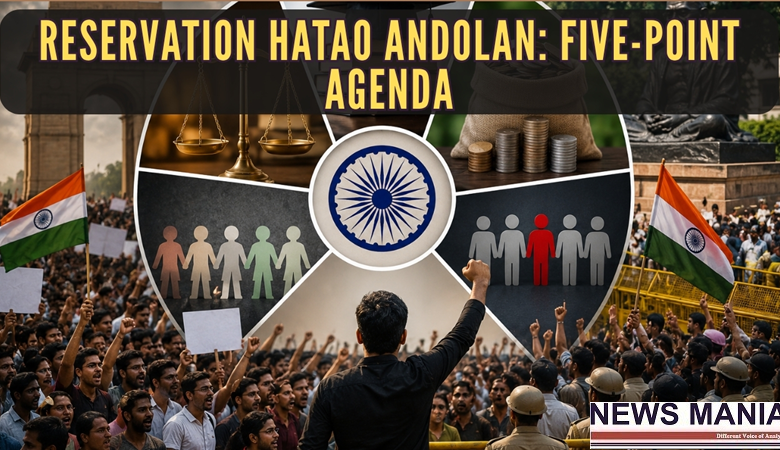
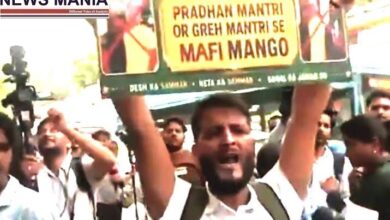
A large group of protesters gathered at Delhi’s Jantar Mantar under the banner of the “Reservation Hatao Andolan”, demanding changes to India’s reservation system and arguing that economic conditions should receive greater importance while determining access to government benefits. The demonstration witnessed a sizeable turnout and led to the detention of several protesters by Delhi Police.
The movement has emerged as a campaign against the existing system of caste-based reservation. Protesters argued that financial hardship affects people across social groups and maintained that government assistance should be directed towards those facing genuine economic difficulties. They called for a wider discussion on whether the current reservation framework continues to adequately address inequality.
One of the major demands raised during the protest was that economic status should play a larger role in determining eligibility for reservation and welfare measures. Demonstrators said economically disadvantaged individuals should receive greater support irrespective of their caste background.
The protesters also demanded consideration of a “quota within quota” arrangement. According to the campaigners, such a system could help ensure that reservation benefits reach the most disadvantaged sections within reserved communities instead of being concentrated among comparatively better-off groups. Another demand focused on providing greater opportunities and support to economically weaker sections. Protesters argued that financial deprivation should receive stronger recognition in policies related to education, employment and government assistance.
The demonstrators further called for a review of the existing reservation system and its implementation. They questioned whether caste should continue to remain the primary basis for affirmative action and sought a broader debate on alternative approaches that could address social and economic disadvantage. Their fifth major demand centred on equal opportunity and greater emphasis on merit. Protesters said government policies should attempt to strike a balance between social justice, economic disadvantage and merit. They maintained that their campaign was aimed at reducing social divisions and creating what they described as a more equitable system.
The demonstration also resulted in a confrontation over the protest venue. According to the police, permission had been granted for a peaceful gathering of up to 500 people at Ramlila Maidan, while the protesters assembled at Jantar Mantar. Security personnel were deployed in the area as the gathering continued.
Police detained several protesters as the authorities moved to control the demonstration. The incident subsequently drew attention to both the protesters’ demands and the question of how such demonstrations should be managed. The Jantar Mantar protest has once again brought the contentious issue of reservation into public debate. The issue remains politically and socially sensitive, with reservation continuing to be an important component of India’s broader debate on equality, representation and social justice.