Hanle Dark Sky Reserve Star Party Brings Astronomy Enthusiasts Together in Ladakh
News Mania Desk/ Piyal Chatterjee/ 15th September 2026

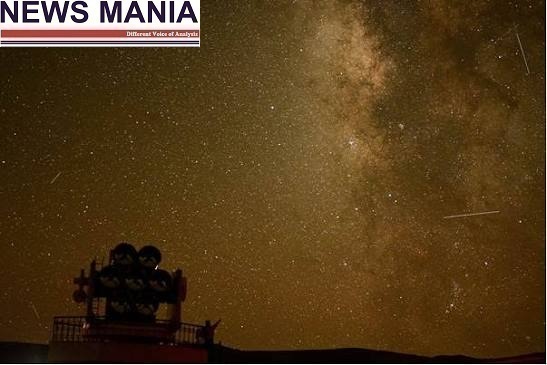
The fourth edition of the Hanle Dark Sky Reserve (HDSR) Star Party brought together astrophotographers and amateur astronomy enthusiasts from across India at the Indian Astronomical Observatory in Hanle, Ladakh. The event was held from September 7 to 12 and provided participants an opportunity to observe and photograph the night sky under some of the country’s darkest skies.
Around 40 amateur astronomers from states and Union Territories including Chandigarh, Goa, Gujarat, Haryana, Himachal Pradesh, Karnataka, Maharashtra, New Delhi, Madhya Pradesh, Tamil Nadu, Rajasthan and Uttar Pradesh attended the event. Participants travelled with specialised astronomical equipment and spent four nights conducting observations and capturing images of celestial objects.
The Star Party was jointly organised by the Indian Institute of Astrophysics (IIA), the Department of Wildlife Protection of UT Ladakh, the Bhabha Atomic Research Centre and the Tata Institute of Fundamental Research. Organisers said the participation demonstrated the growing public interest in astronomy while highlighting the importance of protecting Hanle’s exceptionally dark skies.
An Open Night held on September 10 attracted more than 1,200 visitors, including local residents and tourists. Participants, HDSR Astronomy Ambassadors and observatory staff helped visitors explore the night sky through designated telescopes and explained the importance of astronomy and controlling light pollution.
The event also included training sessions for 25 local villagers who serve as HDSR Astronomy Ambassadors. Trained over the past three years, the ambassadors conduct astronomy tours for tourists and received practical guidance from experienced astrophotographers during the Star Party.
The Hanle Dark Sky Reserve was notified by the Ladakh administration in December 2022 as part of an initiative aimed at reducing light pollution, supporting scientific research and encouraging astro-tourism. The programme also seeks to create economic opportunities for local communities.