The story of Ranji Smile – The Indian chef who introduced curry to the United States and then disappeared
News Mania Desk/ Piyal Chatterjee / 3rd November 2026

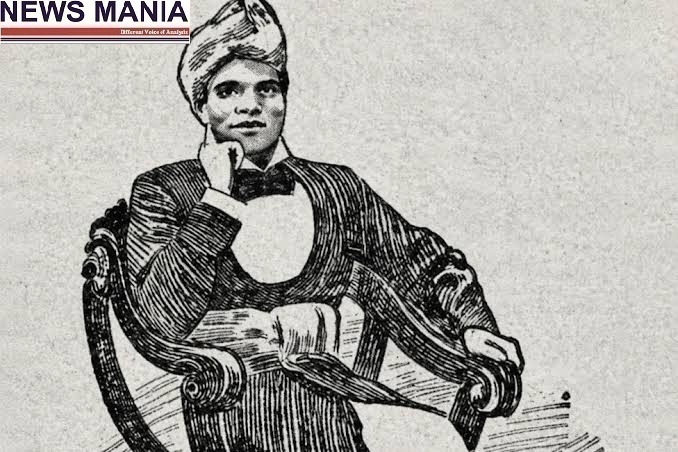
One hundred twenty-five years ago, in 1901, an Indian cook established what was likely the first Indian eatery in the United States. Ranji Smile was among the most vibrant and mysterious personalities to influence the American culinary landscape. In the summer of 1899, Smile traveled by ship from London to New York. We know very little regarding his background and formative years, not even his true name.
“Ranji” likely referenced the Indian cricket prodigy KS Ranjitsinhji, who was a prominent figure at Test matches in Britain at the time. “Smile” might have been an English adaptation of “Ismail”. Regardless of his background, Smile had a rare talent for transformation. Upon entering the portals of Ellis Island, he added a new name to his identity, one that resonated more with America’s promise of equality: Joe. Joe Ranji Smile reached New York to be employed at Sherry’s Restaurant, a glamorous new venue located on Fifth Avenue.
In London, he worked as a curry chef at the Cecil and Savoy hotels. In an 1899 profile in Harper’s, it is noted that Sherry’s owner, Louis Sherry, took notice of him and invited him to transport his culinary talents across the Atlantic. By the late Victorian era, London had established an Indian dining culture; as early as 1810, Sake Dean Mohamed, originally from Patna, launched his Hindostanee Coffee House close to Portman Square, serving customers curry and hookah. Manhattanite palates had little familiarity with masala.
There was, nonetheless, increasing interest in India and its culture. Swami Vivekananda, the captivating speaker and advocate of Hindu philosophy, fascinated crowds during his trips to the city in the 1890s. Simultaneously, an increasing number of Indian sailors, students, and professionals began arriving in New York. This was likely the reason Louis Sherry chose to include a curry chef in his kitchen team.
At Sherry’s Restaurant, Smile became part of a remarkable culinary establishment from the American Gilded Age. Setting itself up as a competitor to Delmonico’s, the epitome of upscale cuisine in New York, Sherry’s served the city’s wealthy elite, such as the Astors, and was renowned for extravagant dining experiences. At one of these gatherings, guests brought their horses into a ballroom, mounted them and dined while riding.
Patrons quickly gathered to sample his dishes of Bombay duck, a sticky lizardfish that is a treat along the western Indian coast, and innovative offerings such as “Lettuce Ceylon.” Preparing and presenting turned into a spectacle. Wearing a satin coat and a blue silk turban, Smile saluted the customers before asking, “Will you prefer the curry hot or mild, sir?” Images of Sherry’s curry cook quickly appeared in newspapers and magazines. A single headline captured everything: “Women in New York are crazy for him.”
As his popularity increased, Smile chose in 1901 to depart from Sherry’s and create his own venue, focused solely on Indian food. To secure funding, he relied on Roland R Conklin, a notable financier and the creator of a primitive model of the motorhome. Omar Khayyam, Smile’s Indian eatery, commenced operations in late 1901 at 325 Fifth Avenue. This location was prime property, just a block from the original Waldorf-Astoria Hotel, where 29 years later, the Empire State Building would be constructed. A smile decorated the eatery with Indian textiles and suspended lanterns.
According to the New York Herald, a group of Indian waiters wearing “large turbans” served at the establishment, accompanied by a team of Indian musicians. Now truly the personification of the American immigrant success narrative, Smile eagerly anticipated his patrons and admirers.
Smile’s fame in New York waned as his showmanship devolved into deceit. Claiming to be a prince of fictional Baluchistan, he sought attention with extravagant antics and illegally trafficked staff for his restaurant, Omar Khayyam. His tales led to legal troubles, culminating in his retreat from the public eye by the 1920s. Despite his downfall, Smile helped popularize Indian cuisine in America. Following his misadventures, Saint Nihal Singh introduced Indian recipes in the Chicago Tribune, and KY Kira opened a successful restaurant in Harlem. Smile’s legacy persists through countless Indian eateries across the US.